by Mark Hudson | Jan 28, 2015 | Emergency Escape Plan
A disaster like a house fire or a carbon monoxide leak could strike at any moment, but do you and your family have an escape plan in place? Hudson Chimney cannot stress enough the importance of making sure every member of your family is prepared and informed in the event of a fire, carbon monoxide leak, or other emergency. Your entire family needs to know the correct procedures to safely get out of the house or apartment when a disaster has occurred. You also need to designate a meeting place outside of the home as well as make plans on how to contact members of the household who are away from the home. We would like to share with you some tips from the National Fire Prevention Association (NFPA) about how to create an emergency escape plan for your family to utilize when a disaster strikes.
Sketch out a map of your home.
You do not have to be artistically talented or extremely detailed when drawing this map. The most important things to include are all windows and doors from every room.
Find two ways out of every room.
Go into each room of your house and locate two exits from each room. Take your map with you to mark on the map exactly where these exits can be found in every room.
Ensure all doors and windows work correctly.
The last thing you want to happen when you are escaping from a fast-burning house fire is to get to your designated exit, only to find it stuck and unable to open. Make sure all doors and windows can easily open and close with no problems.
Install smoke and carbon monoxide detector alarms throughout your home.
These live-saving alarms should be installed on every level of your home and outside each bedroom. Test the batteries by pushing the test button on each alarm to be certain they are all constantly working.
Establish a meeting place outside.
Choose a location, preferably in front of your house, for all household members to meet up with each other after exiting the home. If an emergency should be unfortunate enough to happen, contact any family members who are away from the home. They should also go to the established meeting place as soon as possible.
Remember the importance of visibility.
You want the emergency responders to arrive as quickly as possible, but if your house number cannot be seen from the street, they may have a hard time finding your home, which wastes valuable and crucial time. Be sure your house number can be easily seen from the street.
Memorize the emergency number to your local fire department.
You should also program this number into family member’s mobile phones. Another important numbers to program and label as emergency is a designated out-of-town contact. You can also store family members’ work information, school information, all medical contacts, health insurance information, and family members’ dates of birth and Social Security numbers in your smartphone as well as on a piece of paper kept in a safe place.
Practice makes perfect!
Get in the habit of the entire family practicing the home emergency escape plan about once a month or so.
Have more questions about planning ways to escape your home during an emergency? Contact Hudson Chimney to talk to our expert staff on how to design one of these escape plans for your family.
by Mark Hudson | Dec 24, 2014 | Ash Disposal
Every time you have a wood or pellet-fueled fire, it is a fact of life that ashes will be left behind for you to remove. Do you know how to properly dispose of these ashes? If not, you could end up with a fire caused by the hot coals hidden within the ashes. At Hudson Chimney, we place a high priority on chimney and fireplace safety, so we thought we would share with you some answers to questions on how to correctly remove ashes to protect you from the possibility of a fire.
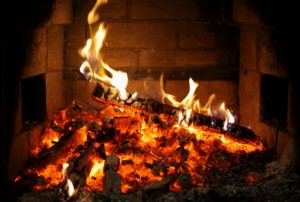
How Does Improper Ash Removal Lead to a Fire?
Many times, homeowners think that simply storing ashes in a metal bucket with no lid is the proper way to remove ashes. However, this is not the case. When this unlidded bucket is sitting outside on your porch, winds can easily blow the bucket over, and this can cause all of the ashes to fall out onto your porch or yard. When this occurs, the ashes get stirred up, and the hot coals become active once again. If your porch has a wooden floor, you could have a dangerous porch fire on your hands caused by the incorrect way of removing and storing ashes. You may also end up with an uncontrollable brushfire in your yard.
What Is the Best Container for Storing Ashes?
The importance of using a proper ash container cannot be stressed enough. Hudson Chimney strongly recommends using a pail or bucket made of sheet metal with a securely fitted lid. The most essential key for safety is the lid. To be even safer, the bottom of the pail should be slightly offset so that the actual bottom does not make contact with flooring and char the surface.
Where Is the Best Place to Store My Ash Bucket?
Never place your bucket on a wooden floor as this can be a fire hazard, even if the bucket has an elevated bottom. You should always store your ash bucket outside on a non-combustible surface such as stone, brick, concrete, or slate.
Is it Necessary to Remove Ashes After Every Fire?
According to the Chimney Safety Institute of America (CSIA), you do not have to remove ashes every time you have had a fire. In fact, the CSIA recommends leaving a one-inch layer of ash on the floor of your firebox to make it much easier to build and maintain a fire. The hot coals within the ashes will add more heat to the fuel and reflect this heat back into the fire. Additionally, a thin layer of ash also protects the floor of your firebox. However, you need to monitor this level of ash and should never allow this layer of ashes to get too deep. If these ashes make contact with the bottom of your grate, it can cause the grate to prematurely burn out.
I Have a Wood-Burning Stove or a Pellet Stove. Is the Proper Ash Removal Procedure Any Different?
The storage procedures are still the same for these stoves. If your stove is long and narrow and burns from the front to the back, according to the CSIA, it will benefit from removing the ashes that are just inside the door. Then, you can move the hot coals to the back of the stove to help igniting a fire quickly. The incoming air from combustion will reignite those hot coals and rapidly heat up the entire firebox. When all of the ashes are removed, it can be difficult to start a fire because all of the bricks in the firebox must be heated to saturation before your fire can really get going.
If you have any questions about proper ash removal, contact Hudson Chimney to ask our staff. We are happy to help you with all fire safety issues.
by Mark Hudson | Dec 15, 2014 | Firewood
If you have a wood burning fireplace or stove, you may wonder if there is anything of significance that you can do to maintain the efficiency, safety, and health of your appliance. The answer is yes! By choosing the best firewood to burn in your appliance, you can protect your chimney or stovepipe from rapid creosote build-up and your home from dangerous chimney fires. Not only this, but the right firewood will help you to create fires that are warmer and more enjoyable.
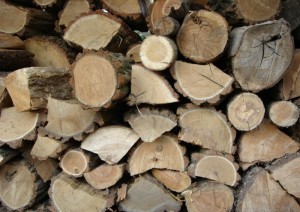
Regardless of the type of woodburning appliance you own, you should only burn seasoned firewood. According to the Chimney Safety Institute of America, the distinction between seasoned and unseasoned firewood is its moisture content. Seasoned firewood has a low moisture content, usually between 20 and 25 %. Unseasoned firewood, on the other hand, can have a moisture content as high as 45 %. Burning firewood with a higher moisture content can cause you and your chimney a number of problems, from the unpleasant to the dangerous. You will have trouble enjoying your chimney if you burn unseasoned firewood because of the unpleasant smell and smoke it produces. However, your biggest concern is that the water in unseasoned firewood will allow for creosote to rapidly build up in your chimney. Creosote is highly flammable, creating a hazard for chimney fires, and can build up into glazed creosote, which can only be removed from your chimney by a professional with chemicals.
If you chop your own firewood, it is easy to know if it is seasoned or unseasoned. Simply be sure to cut your firewood to length six months before you plan to use it in order to give water in the wood time to environment. Cutting your wood to length opens up the microscopic tubes in the wood that hold water, which allows the water to escape.
If you buy your firewood, it is a little more difficult to tell if your firewood has been properly seasoned. The best way to be sure your firewood has been properly seasoned is to buy it six months before you intend to use it and store it properly. However, seasoned and unseasoned firewood have characteristics that differentiate them from each other that you can utilize to see if the firewood you are buying has been seasoned. Seasoned firewood has darker ends and more cracks than unseasoned firewood and also tends to be lighter. Seasoned firewood also makes a clunking rather than a thudding noise when it is hit.
Whether or not you buy or chop your firewood, you must be sure that it is properly stored. A wood shed is the best place to store firewood. However, you can also store wood in a sunny location as long as you remember to cover the wood when it rains or snows. No matter where you store it, make sure that air is allowed to circulate to promote evaporation and try to store the wood off of the ground.
Give Hudson Chimney a call if you are unsure if you are burning the correct kind of firewood or if you have concerns regarding creosote build-up. The professionals at Hudson Chimney know how to keep you and your home warm and safe!
by Mark Hudson | Nov 30, 2014 | Ash Disposal
If you have a wood burning chimney, you may be unsure of how to properly and safely dispose of the remaining ash in your firebox. You may also be unsure as to how often you should have your fireplace and chimney professionally cleaned. The experts at Hudson Chimney have the expertise and skill necessary to answer all of your questions regarding your fireplace and chimney as well as to clean and help you maintain and repair your chimney.
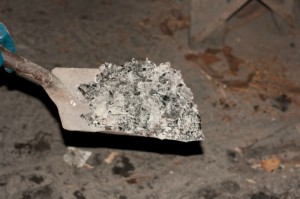
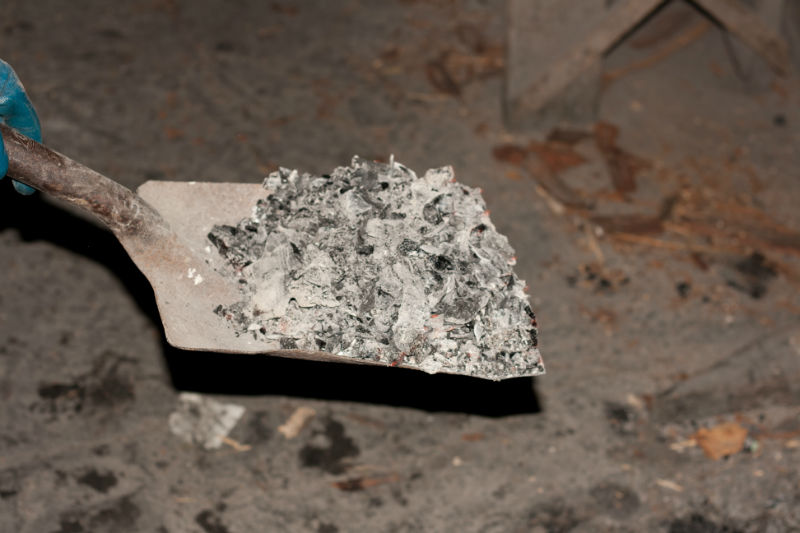
When you are emptying your firebox of ash, it is important that you protect your hands from leftover embers by wearing leather gloves. Use a metal scoop to transfer the ash from your firebox to a metal bucket and add a little water. Place the bucket in a location away from any combustible materials (outside the home is best), and let it sit. It is also a good idea to use the metal scoop to mix the ash and break up any chunks before you let it sit. According to The National Garden Association, the ash can be used as a fertilizer for your gardens. However, this is not the case when you burn cardboard, treated wood, or painted wood, which create toxic ash and should not be burned in the first place, as they also release toxic fumes when they are burned.
When you do remove ash from your firebox, according to the Chimney Safety Institute of America, it is beneficial to leave some of the ash. The CSIA recommends that you leave a layer of ash that is one inch thick on the bottom of your firebox in order to make building and maintaining a fire easier, create hotter fires, and protect the floor of you firebox. However, it is still important to clean your firebox because leaving more than a one inch layer can lead to the premature burn out of your grate as well as decrease the amount of fuel you can add to your fire. If you do leave a layer of ash, make sure to remove this layer at the end of chimney season, when you will no longer be using your chimney.
It is also important to have your chimney cleaned by a professional at least once a year. Only a professional can thoroughly clean your chimney as well as remove all of the creosote that has built up. Creosote, which is very flammable, is created as a byproduct of wood burning fires when hot smoke and gases hit the cool sides of your chimney. It is important to have creosote professionally removed so it does not build up into glazed creosote, which can only be removed from your chimney with chemicals.
Call Hudson Chimney if you have any questions about the proper disposal of ash or if you have not had your chimney cleaned yet this year. The experts there have the skill to provide you with a clean, safe, and efficient chimney for the winter.
by Mark Hudson | Nov 15, 2014 | Firewood
If you have a wood burning appliance, then you have more control than you probably think over the way your appliance runs. The type of wood you burn influences how efficiently your chimney runs in addition to the overall health of your chimney. It is important, then, that you choose to burn seasoned firewood. According to the National Chimney Safety Institute of America, burning seasoned firewood will allow your appliance to burn cleaner and more efficiently than burning unseasoned firewood. In fact, whether or not your firewood is seasoned is far more important than the species of wood you burn.
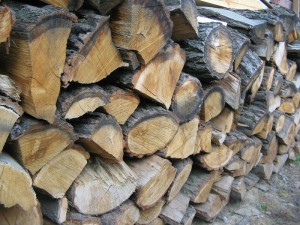
You may be wondering what the difference is between seasoned and unseasoned firewood as well as why this difference is important. All wood has a certain amount of water in it. Seasoned firewood has moisture content of 20 to 25 percent while unseasoned wood can have a moisture content of up to 45 percent. Burning unseasoned wood is inefficient because energy is lost to drying the wood before burning it, leading to a lower heat output. Not only this, but burning unseasoned wood also leads to more creosote build up in your chimney or stovepipe.
In order to make sure that your firewood is seasoned if you chop it yourself, cut it to length at least six months before using it. Splitting and cutting the firewood to its proper length gives the wood more exposure to the sun and wind, allowing evaporation to occur. If you buy your firewood, it is good to buy it the spring before you use it to ensure that it is well seasoned. However, if you buy your firewood close to the time you burn it there are several ways to tell if the firewood you are buying is seasoned. Check to make sure that the ends of the firewood are cracked and darkened and that the wood is light and makes a “clunking” noise when two pieces are hit together. Unseasoned firewood will be heavier.
The way you store your wood is also important to the way it will burn. If your firewood is exposed to snow and rain, it will absorb too much water to burn properly and possibly rot. Store your wood off of the ground and cover it in the case of bad weather. Leave it uncovered on sunny days to allow evaporation to occur.
When burning wood, make sure that you do not burn wood that has been painted or treated, which can cause toxic fumes to be released into your home. Also, if you end up burning unseasoned wood, it is important that you have your chimney or stovepipe frequently cleaned and inspected to avoid hazardous creosote build up.
If you are unsure about the type of wood you should be burning in your fireplace, ask an expert at Hudson Chimney during your annual chimney cleaning and inspection. The professionals at Hudson Chimney have the knowledge and training to help you determine the best choices for your chimney in order that it run efficiently and safely.