by Mark Hudson | Apr 6, 2015 | HeatShield
If you live in an older home with a masonry chimney, it most likely has a clay tile flue liner. Clay tiles have been used to line chimney flues since the beginning of the 20th century, and there are good reasons why. These tiles can withstand extremely high temperatures, and they hold up well against the corrosive byproducts of combustion that pass through the flue on their way out of the chimney. Once installed, clay liners will stay in good shape up to 50 years. However, when the clay tiles become cracked and chipped over time, it can be costly to repair them or to replace the liner as it is a very difficult and time-consuming task. When the HeatShield Chimney Repair and Resurfacing System was developed around 20 years ago in Europe, repairing and relining a clay tile liner became so much easier and less costly. At Hudson Chimney, our technicians are experienced with using HeatShield, and our customers who have had their clay flue liners repaired or replaced with this product have all been very satisfied. We would like to tell you more about HeatShield and what it can do for your clay tile-lined chimney.
What exactly is HeatShield?
A specially formulated “Cerfractory” sealant material, HeatShield can restore the integrity of your chimney’s flue to vent out toxic gases from your home. Eliminating the dangers in your flue caused by cracks, gaps, and spalling, HeatShield will make your chimney as safe and as efficient as it originally was when first built. Depending on the condition of your clay tile liner, the Joint Repair system or the Resurfacing System will be used.
What does the Joint Repair system do?
If our chimney inspectors at Hudson Chimney only find defective mortar joints in your clay tile liner, we will use the Joint Repair system. First we will make a custom-made foam applicator blade to fit your chimney. Once this tool has been inserted into your chimney and positioned below each gap or void, we will then add the HeatShield Cerfractory Flue Sealant mixture. Each void and gap will be filled, and when we pull out the foam applicator blade, it will smooth the filled gaps and voids as it comes out of your chimney. Then we scan the repair with a special video camera to be sure the repairs have been done correctly.
What does the Resurfacing System do?
If your chimney liner has a cracked or spalled flue but is still sound, we will use the Resurfacing System. Again, we will make a custom-fit foam applicator plug that will be placed at the bottom of the flue and attached to a winch atop the chimney. We then prime and clean your old liner with a “tie coat” material, which is applied to the flue walls by pulling the plug upwards with the winch. After this coat dries, we then apply the HeatShield mixture with the foam plug in the same way we applied the primer. This method is called “slip casting” or “slip cast extrusion.” After this is applied, we will look at the scanned video to be sure your entire chimney is sealed and smoke-tight.
Have more questions about HeatShield? Contact Hudson Chimney to talk to our staff to see if HeatShield is right for your clay tile chimney liner.
by Mark Hudson | Mar 27, 2015 | Chimney Water Damage
If your home has a masonry fireplace, you might know that the Chimney Institute of America (CSIA) has named water as the biggest enemy of your chimney. Water penetration of your chimney is the biggest cause of expensive and extensive damage to the interior and the exterior of your home. Keeping water out of your chimney is the essential key to prevent the deterioration of the entire structure. At Hudson Chimney, our CSIA-certified technicians are well aware of the damage water can do to a masonry chimney, and we can find the leak, repair the damage, and then prevent further water penetration of your chimney. Often asked by our customers how water can be such a big problem, we would like to share three ways water leaks can do lots of damage to a masonry chimney.

1. Water leaks can cause brick and mortar spalling, which can lead to structural damage.
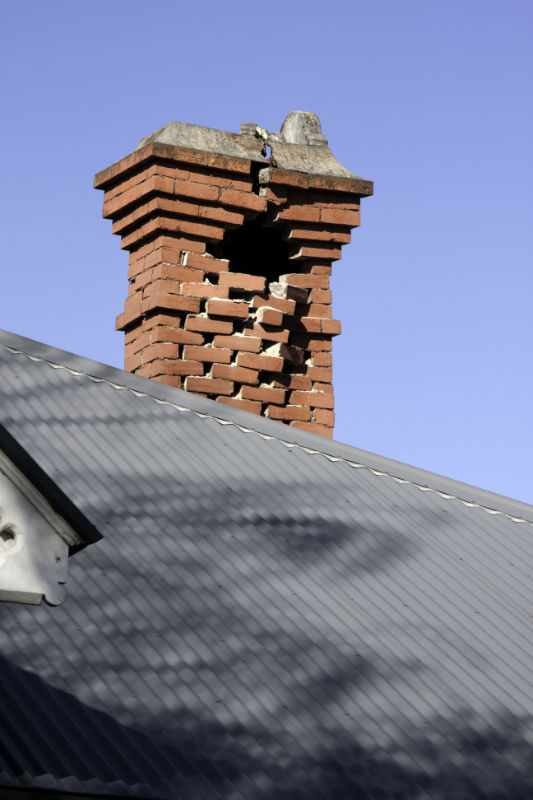
The exterior bricks and mortar of your chimney suffer a great deal of water exposure, and this water will penetrate into the materials, which causes them to erode. When this trapped water freezes inside your bricks and mortar, the breaking apart, cracking, and loss of masonry materials occurs when the temperatures rise and the water thaws. The expansion of the thawed water can be too much for bricks to endure, which is why they become loose and/or break off of your chimney. This phenomenon is known as spalling, and unrepaired spalling can lead to possible severe structural damage of your chimney. Additionally, water will continue to invade your chimney through the holes provided by the spalled bricks and mortar. If you ever notice loose bricks or mortar on the exterior of your chimney, contact Hudson Chimney for a chimney inspection. We will repair the damage and waterproof your chimney to prevent spalling from occurring again.
2. Water leaks can cause cracks and other deteriorations to your chimney flue liner, which can lead to carbon monoxide poisoning.
Water penetration not only affects the bricks and mortar of your chimney, but it causes damage to your interior flue liner as well. If you have a clay chimney liner, cracks will form due to water leaks, and if you have a metal chimney liner, rusting will occur from water exposure. Both of these problems can cause your liner to break apart and crack. A cracked liner can be a health hazard since your chimney liner serves to protect you and your family from the by-products of combustion, like toxic smoke and carbon monoxide, from entering your home. At Hudson Chimney, we can repair and restore clay chimney liners with HeatShield, and we can replace damaged liners with a durable stainless steel.
3. Water leaks can cause interior damage to your home, including stained walls and ceilings and mold growth.
Not only does water penetration of a masonry chimney cause many issues to the chimney itself, but a leaky chimney can also stain the ceilings and walls of the room where your fireplace is located. If you find water leak stains in your fireplace room, you should also consider the possibility of mold growth in the ceilings, walls, fireplace, and chimney. Contact Hudson Chimney as soon as possible if you ever see this sort of water penetration damage.
If you have more questions on what types of damage water penetration can do to a masonry chimney, contact Hudson Chimney today. We are happy to help you repair and prevent this kind of damage to your fireplace and chimney.
by Mark Hudson | Mar 10, 2015 | Fire Safety Tips
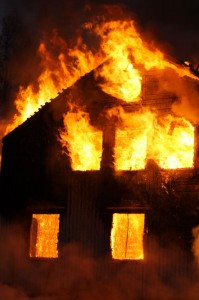
You may or may not have a fireplace in your home, but even if you do not have a fireplace, there is always a possibility of a house fire. If a fire does break out in your home, you may only have as little as two minutes to be able to escape. The best way to protect yourself and your family is the identification and removal of all fire hazards from your home. Another excellent way to protect yourself, your family, and your home is to know and follow important home fire safety tips. At Hudson Chimney, we like to educate our customers on fire safety, and we would like to share with you some fire safety tips we feel are essential.
Install Multiple Smoke Alarms Throughout Your Home.
The Red Cross states that 60% of house fire deaths occur in homes with no smoke alarms installed. Smoke alarms should be installed on every level of your home, inside bedrooms, and outside sleeping areas. Make it a monthly routine to check your smoke alarms to be sure they are still working properly. Smoke alarms will usually last for at least 10 years; however, you will have to change the batteries to keep them working properly.
Create an Escape Plan to Have in Place for Your Entire Family.
Everyone in your home should know two ways to escape from every room in your home. Designate a meeting place outside the house to be sure everyone has gotten out safely. Use a two-minute time frame when you are planning your escape routes. Practice your escape plan with your family on a regular basis to be sure everyone knows how to proceed if an emergency should occur. Include waking up to smoke alarms, low crawling, and meeting outside during your escape plan practices. Be sure everyone in the house knows how to dial 911. Teach family members how to stop, drop, and roll if their clothes happen to catch on fire.
Be Safe in the Kitchen.
Never leave the kitchen unattended when cooking, frying, or broiling food, and do not leave your home when roasting, boiling, baking or simmering food. Set a timer to alert you when your food should be done cooking, baking, boiling, or roasting. Keep all flammable items like pot holders, towels, clothing, and plastic away from the stove. Keep all pets off cooking surfaces and countertops to prevent them knocking things onto the burners and to protect them from possibly burning themselves.
Use Common Sense.
Keep flammable items at least three feet away from space heaters, fireplaces, and other heating appliances. Turn off portable heaters when you leave the room and when you go to sleep. Never smoke in bed. Talk to your children on a regular basis about the dangers of fire. Always keep matches and lighters out of reach from children.
Know the Dangers of Carbon Monoxide.
Just as you do with smoke alarms, install carbon monoxide detector alarms on every level of your home, inside bedrooms, and outside sleeping areas. If one of these alarms goes off to alert you of the presence of carbon monoxide in your home, move quickly to the fresh air outdoors or stand by an open window or door. Never use generators, grills, camp stoves, or any other gasoline, propane, natural gas, or charcoal burning devices inside a home, a garage, basement, crawlspace, or other partially enclosed space.
Want to know more home fire safety tips? Contact our staff at Hudson Chimney. Fire safety education is part of our duties as CSIA-certified chimney sweeps, and we take pride in teaching our customers about fire safety procedures and precautions.
by Mark Hudson | Feb 26, 2015 | Top Sealing Damper
According to the Chimney Safety Institute of America (CSIA), a damper is an important component of every chimney. Essential for an energy-efficient home, the damper keeps the heat in and the cold air out of your house, which saves you money on heating bills. Your damper is also used to control the flow of smoke, gases, and the other byproducts of combustion up the chimney to exit your home. Available in two different types, you can choose between the throat damper and the top-sealing damper. Also known as the traditional fireplace damper, a throat damper is installed right above the firebox and is found in many old masonry chimneys. However, this type of damper has many flaws and issues. At Hudson Chimney, we strongly recommend the top-sealing damper over the throat damper. We would like to tell you more about the benefits of these dampers.
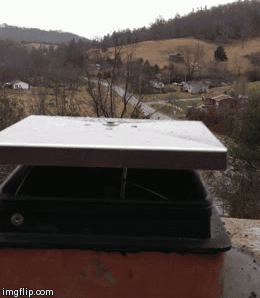
This clip is courtesy of Richie Baxley at Environmental Chimney Service in Asheville NC.
A top-sealing damper serves two functions, allowing you to “kill two birds with one stone.”
One of the main benefits of a top-sealing damper is that it also serves as a chimney cap when the damper is closed, and, to be honest, this type of damper actually gives you better protection than an ordinary chimney cap. Equipped with a silicone rubber gasket that seals in heat and air conditioning as a damper, a top-sealing damper also gives you an air-tight seal to keep out water, debris, birds, squirrels, and raccoons — just as a chimney cap would. When our customers need a new chimney cap, Hudson Chimney will recommend that they install a top-sealing damper instead of a chimney cap. Some models of top-sealing dampers come with caps, so even when the damper is open, your chimney is still protected from debris and animals.
A top-sealing damper will save you both energy and money.
Throat dampers just do not completely seal as well as top-sealing dampers. You will not have to worry about cold air, ice, and snow entering your flue to create a cold core in your chimney. A cold core tries to cool your home at the same time that your heating system is trying to warm it up, which wastes both fuel and money. As a top-sealing damper sits atop your chimney, cold air never even has a chance to get anywhere inside because your entire flue is sealed air-tight with the silicone rubber gasket. Believe us when we say you will save money on both cooling and heating bills when you install a top-sealing damper.
A top-sealing damper is easy to operate.
With some throat dampers, you must practically stick your head up the fireplace to open and close them. When you have a top-sealing damper, opening and closing the damper is simple. A stainless steel cable from the damper drops down the chimney and connects to an easily-accessible handle which is mounted inside the firebox. Different models will have different opening and closing methods, but Hudson Chimney guarantees you will find all easy to use.
Want to know more about the benefits of top-sealing dampers? Contact Hudson Chimney to find out even more advantages to this type of damper.
by Mark Hudson | Feb 6, 2015 | Chimney Service
Believe it or not, spring is on its way, and fireplace season will be slowing down. To be sure your chimney is safe after a long and cold winter, scheduling your annual chimney sweeping and inspection now is essential, especially if your chimney is in need of important repairs. At Hudson Chimney, one of our busiest times of the year is the spring, and if you procrastinate for too long, you may have to wait for several weeks before you can arrange an appointment for our certified technicians to visit your home to clean, examine, and repair your chimney. According to fire safety organizations such as the National Fire Prevention Association (NFPA), it is recommended you schedule a chimney sweeping and inspection once every year. We would like to share with you the important chimney maintenance steps our chimney technicians will take to find essential repairs needed to make your fireplace and chimney system safe.
CHIMNEY SWEEPING
When the Chimney Safety Institute of America (CSIA)-certified sweeps at Hudson Chimney clean your chimney after winter, our main concern is removing all of the creosote deposits that have accumulated on the walls of your chimney. Forming naturally as the by-products of combustion (smoke, gases, tar fog, vapors, etc) exit the cooler walls of your upper chimney, creosote is the highly combustible result of the condensation that occurs. Creosote can be either black or brown, and its appearance can vary. Whether it is sticky and gummy, crispy and brittle, or shiny and hard, creosote, especially in large amounts, is extremely flammable, which makes it the cause of a majority of chimney fires. Getting rid of these creosote buildups after winter’s heavy fireplace usage is essential to the safety of your chimney.
CHIMNEY INSPECTING
Hudson Chimney takes pride in performing detailed post-winter chimney inspections because we want to find any damage that needs repairing to ensure the safety of your fireplace and chimney. Of course, we seriously examine every part of your chimney; however, there are specific repairs we are looking for, including the following:
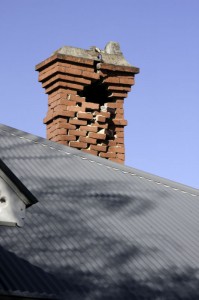
damaged or deteriorated masonry — Loose bricks and chipped mortar on the exterior of your chimney are sure signs of water penetration damage, and this alerts us to the possibility of water leaking inside your chimney that creates even more damage to its interior. If this masonry damage goes unrepaired, you will end up with costly repair work, including a possible rebuild of your entire chimney.
cracks in the chimney cap — Your chimney cap serves as protection from both water and animal intrusions of your chimney. A deteriorated chimney cap serves no help at all to your chimney. We can repair cracks and other damage to chimney caps as well as install new caps if the existing caps are beyond repairing.
cracks and holes in the chimney flue liner — Water leaks can cause serious damage to the liner of your chimney that can endanger your family’s health. A deteriorating flue liner allows toxic gases like carbon monoxide to leak into your home. Repairing or replacing a damaged chimney flue liner will keep those gases exiting out of your chimney instead of infiltrating the interior air of your home.
Save yourself the hassle of waiting for weeks to maintain your chimney after winter by contacting Hudson Chimney now. We are happy to schedule an appointment for your annual sweeping and inspection as well as perform all necessary repairs.