by Mark Hudson | Jun 8, 2016 | Chimney Leaks
Even though your masonry chimney was built to be durable and strong enough to last a lifetime, its exterior is constantly exposed to the elements of weather. Water from rain erodes the bricks and mortar joints over the years, and this can lead to chimney leaks as well as to severe structural damage. Protecting your chimney from water penetration is one of the most important responsibilities a homeowner has, and Hudson Chimney is proud to provide water leak repair and prevention services. For over 30 years, we have been taking care of chimneys across Northeast Florida, and we have the training and experience to ensure your chimney is safe from water damage. Our chimney technicians have all been certified by the Chimney Safety Institute of America (CSIA), and we agree with this non-profit educational organization that water is the biggest enemy of masonry chimneys. We would like to tell you more about the services we provide to take care of leaky chimneys.
MASONRY REPAIR
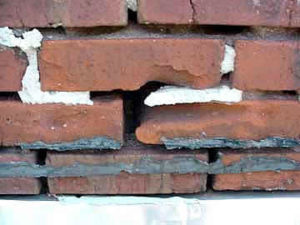
If you have noticed cracked, loose, or missing bricks and mortar joints on the outside of your chimney, you will need our masonry repair services to restore the structure of your chimney. Damaged masonry materials allow even more water to get inside the flue, which can lead to rusting of the liner or damper and to rotting of the wood that surrounds your chimney. Hudson Chimney uses masonry techniques like tuckpointing to replace damaged and missing bricks and mortar joints. You can trust us to make sure your chimney is safe and sound.
CHIMNEY CAP
Without a chimney cap professionally installed on top of your chimney, rain water can easily get into the flue. Hudson Chimney offers a wide variety of chimney caps, and we can help you find the best one for your chimney and install it to protect your chimney from water intrusion. The CSIA recommends chimney caps, as the least expensive preventive measure you can take against chimney water leaks.
FLASHING
One of the most common areas for water leaks is where your chimney meets the roof. To protect this vulnerable spot, Hudson Chimney can install a customized flashing system by wrapping metal sheets around your chimney at the roof. We will ensure that the flashing provides an airtight seal of your chimney. If you have a flashing system that has been damaged, we also provide flashing repair services.
WATERPROOFING
Once your chimney has been repaired, Hudson Chimney can create a barrier against water penetration by applying a waterproofing formula to your entire chimney. We only use formulas that are 100% vapor permeable, which is important because it allows vapors to escape the masonry materials while keeping water out of them. Our waterproofing treatment has a 10-year warranty, so your chimney will be protected from water penetration for a decade.
Protect your chimney from damaging water leaks. Contact Hudson Chimney today to schedule an appointment for a water leak chimney inspection.
by Mark Hudson | May 23, 2016 | fireplaces
If you have a prefab fireplace, you know how important it is to follow the manufacturer’s instructions so that it works safely. The Chimney Safety Institute of America (CSIA) says that using your prefab fireplace properly is critical to operate it efficiently and safely. Even though these types of fireplaces are not built to last as long as masonry fireplaces, you can prolong the life of your factory-built fireplace with regular maintenance and service. One of the most common problems with prefab fireplaces has to do with the firebox. Over the years, the lining of the firebox can suffer from rust corrosion, which can cause the firebox to crack. When this happens, your home is at a greater risk of an accidental fire because the cracks and gaps allow fire and heat to reach the combustible materials in the walls that surround the fireplace. Hudson Chimney has years of experience in repairing damaged fireboxes in prefab fireplaces, and we would like to tell you more about what can damage your firebox.

WATER LEAKS
The main reason a firebox in a prefab fireplace suffers from rust corrosion is exposure to water. When you have a prefab fireplace and chimney that is covered with a chase, you need a chase cover to keep water out of the chimney. If the cover is damaged or missing, water from rain can easily enter your chimney, and this is how your firebox becomes corroded with rust. Hudson Chimney can not only repair your damaged firebox, but we can also install a new chase cover that will protect your chimney and fireplace from water leaks.
FREQUENT USAGE
Prefab fireplaces are designed to be used occasionally, and if you burn fires in your prefab fireplace everyday, it can lead to firebox damage. This type of fireplace is not made to handle daily exposure to extremely high temperatures. If you want to use your fireplace everyday during the winter, Hudson Chimney can help you upgrade to a fireplace insert that is manufactured to be used more often.
WRONG PART INSTALLATION
When certain parts, such as the damper and smoke dome, of your prefab fireplace and chimney need to be replaced, it is essential that those parts match the brand name and model number of the original parts. If these parts are not replaced with parts that match the originals, your prefab fireplace will not operate safely and properly. You could end up experiencing a house fire in this situation. Hudson Chimney will take the time to find the exact parts needed for your prefab fireplace.
If your prefab fireplace is calling out for help, Hudson Chimney is here to solve the problem. Contact us to schedule an inspection of your prefab fireplace today.
by Mark Hudson | May 5, 2016 | Chimney Inspections
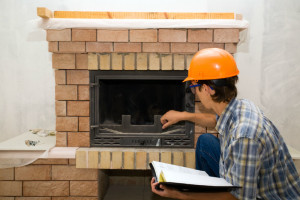
Exterior damage to your masonry chimney is easily noticed, but problems deep within the flue can be impossible for you to see. A lot of damage can be lurking inside your chimney, and you could be endangering yourself and your family by using your fireplace when any damage exists. This is why it is so important to have an annual professional chimney inspection. At Hudson Chimney, we have all been certified by the Chimney Safety Institute of America (CSIA) in properly inspecting chimneys. We know where to look for damage inside your flue, and we perform video scans on certain inspections we do, which allows us to see every inch of the interior of your chimney. If we do find any problems, we have the video footage that we can show you to help you understand the type of repairs needed to correct the issue. We would like to tell you a bit more about the importance of chimney inspections.
What kind of damage can typically be found inside a chimney?
One of the most common problems Hudson Chimney often finds inside chimneys is a cracked chimney liner, which can be very hazardous. If your chimney has suffered a water leak, your liner can suffer from rusting and other corrosion damage and crack and break apart. When your liner has cracks and gaps, the toxic byproducts of combustion can leak into your home. Another issue we see is chimney blockages. Many things can block your flue, including leaves, sticks, nesting materials from birds and wild animals, soot, and creosote. When your chimney is blocked, you are at a higher risk of a chimney fire and a carbon monoxide leak. Something else we often find when we inspect the interior of chimneys is a flue that is not properly sized to the heating appliance. This can cause problems including an overproduction of carbon monoxide, chimney draft issues, and inefficiencies in the operation of your fireplace and chimney.
What is involved in a chimney inspection from Hudson Chimney?
Your chimney inspection will depend on the level you need. Over a decade ago, the National Fire Protection Association (NFPA) adopted three levels of chimney inspections to remove inconsistencies in inspections and streamline the process across the country. Level 1 is the most basic level of inspection, which is included with our annual chimney sweeping services. For this level, we will carefully check out the readily accessible parts of the inside and outside of your chimney and the accessible parts of your heating appliance and its heating connection. If you have changed your heating appliance, are selling or buying a home, or have experienced a chimney fire, earthquake, or severe weather event, you will need a Level 2 inspection. This level includes everything in a Level 1 inspection, a video scan, and an examination of the attic, crawl space, or basement. If we find a potentially hazardous problem, we will recommend you have a Level 3 inspection. This level includes everything in a Level 2 inspection and the removal of components, such as the chimney crown and an interior chimney wall. While a Level 3 inspection may seem destructive, it is necessary for your safety.
Just because your chimney looks great on the outside, you could have hidden hazards lurking inside your flue. Contact us at Hudson Chimney to schedule your annual chimney inspection today.
by Mark Hudson | Apr 22, 2016 | fire safety
When you buy a home, you have to hire a home inspector to make sure there are no hidden problems with any of the major systems in the house. Your home inspector will check out the electrical and plumbing systems, the structure and foundation, and other parts of the home. After you receive the final inspection report, you may believe everything in the fireplace and chimney system works properly, but home inspectors are not necessarily chimney experts. Many of the national fire safety organizations like the National Fire Protection Association (NFPA) and the Chimney Safety Institute of America (CSIA) recommend that the chimney and venting system should be inspected by a professional certified chimney technician before you buy a home. Our CSIA-certified chimney professionals at Hudson Chimney are trained and experienced in finding damage and potential problems in chimneys and fireplaces. You may think you are saving money by not hiring a chimney technician for an inspection before you purchase a house, but there could be a problem with the system that can not only cost you a lot more money in the future, but it could also be a danger to your life. We would like to tell you about the importance of a professional chimney inspection when you are buying a home.

Home inspectors can miss some major problems with a chimney and fireplace system.
While home inspectors have been trained and certified to professionally inspect the major systems of a house, they usually have not received any professional extensive training concerning fireplaces and chimneys. For example, the CSIA reports that a home inspector approved a chimney and fireplace system, which was found to have some major problems by a CSIA-certified chimney sweep. The chimney inspection discovered that the height of the chimney was not tall enough to meet building code regulations, the existence of drywall exposure, and the separation of the hearth from the wall. These problems could cause chimney draft issues, fire hazards, and carbon monoxide leaks. If the homeowner had not hired the chimney sweep because the home inspector found no problems, he or she could experience a devastating fire or become ill from carbon monoxide poisoning.
Home inspectors are not required to thoroughly inspect chimneys.
The most a home inspector will typically do to check out the chimney is using a flashlight to look into the flue. A chimney inspection from the CSIA-certified sweeps at Hudson Chimney will include a video scan from a closed-circuit camera that has been designed to be used inside a chimney. We will have a close-up look at every inch of the inside of that chimney, and we can show you any damage or possible problem we may find. You will also have the needed evidence to show to the homeowner of damage that needs to be repaired before you will agree to purchase the home.
Shopping for a new home? Contact us at Hudson Chimney to schedule an appointment for a professional chimney inspection to be sure the home you are buying poses no dangerous risks from the chimney and fireplace system.
by Mark Hudson | Apr 7, 2016 | Chimney Liner, chimney maintenance
If you have an older masonry chimney, you most likely have a clay tile liner. While these liners are durable and long-lasting, the clay tiles do crack and break off over the years. Repairing clay tile liners can be costly and time-consuming, but, fortunately, there is another alternative. Hudson Chimney is proud to offer the HeatShield system to repair and reline clay tile liners. We have been certified by the company that manufactures HeatShield, so you can trust our skills, experience, and training to use this product properly and successfully. We are often asked about this relining system, so we would like to tell you more about HeatShield and how it can restore your chimney liner.
What exactly is HeatShield?
A specially created “Cerfractory” sealant, HeatShield was developed 20 years ago in Europe to restore your chimney to its original level of safety and efficiency. When your clay tile liner is damaged with cracks and gaps, it can be dangerous as these voids allow toxic gases like carbon monoxide to leak back into your home. An environmentally friendly product made from recycled and naturally occurring materials, HeatShield is a less expensive way of relining a chimney, compared to rebuilding your chimney or removing clay tiles to install a new liner.
How does HeatShield repair my clay tile chimney liner?
If Hudson Chimney determines that your liner simply needs repairing, we can use one of two HeatShield methods: the Joint Repair System, if only defective mortar joints are found, or the Resurfacing System, if you have both damaged mortar joints and other minor defects in the tile liner. With the Joint Repair System, we take a special foam applicator blade that has been customized to fit your chimney and place it down your chimney to position it below each gap or void. We then add the HeatShield Cerfractory Flue Sealant mixture to fill in every void. Once the voids have been filled, we will pull the blade upward, which will smooth the repaired voids. The Resurfacing System is very similar, except we will use a customized foam applicator plug. This plug will be placed at the bottom of your flue and attached to a winch at the top of the flue. A primer is applied first, and then we will add the HeatShield mixture. As the plug is pulled up by the winch, the mixture will be smoothed to the right thickness. For both systems, the work will be checked by viewing the footage from the video camera at the bottom of the blade or plug. This ensures the repairs have been done properly.
How can HeatShield replace my liner?
If your clay tile liner is damaged beyond repair, Hudson Chimney can use the CeCure Sleeve Relining System. This process begins with a coat of HeatShield, which is applied with the same type of plug used in the Resurfacing System. Next, the CeCure Sleeve, which is a ceramic insulation sleeve that has been reinforced with stainless steel fabric, will be lowered into your chimney and attached mechanically to the top of the chimney. We then pull the plug down the chimney to press it into the first coat of HeatShield. Finally, another coat of HeatShield will be applied over the CeCure Sleeve. This procedure will also be video recorded and viewed afterwards to be sure the sleeve is in the proper place.
If your clay tile liner needs repairing or replacing, HeatShield can be the perfect solution. Contact us at Hudson Chimney to schedule an inspection of your clay tile liner today.