by Mark Hudson | Apr 22, 2016 | fire safety
When you buy a home, you have to hire a home inspector to make sure there are no hidden problems with any of the major systems in the house. Your home inspector will check out the electrical and plumbing systems, the structure and foundation, and other parts of the home. After you receive the final inspection report, you may believe everything in the fireplace and chimney system works properly, but home inspectors are not necessarily chimney experts. Many of the national fire safety organizations like the National Fire Protection Association (NFPA) and the Chimney Safety Institute of America (CSIA) recommend that the chimney and venting system should be inspected by a professional certified chimney technician before you buy a home. Our CSIA-certified chimney professionals at Hudson Chimney are trained and experienced in finding damage and potential problems in chimneys and fireplaces. You may think you are saving money by not hiring a chimney technician for an inspection before you purchase a house, but there could be a problem with the system that can not only cost you a lot more money in the future, but it could also be a danger to your life. We would like to tell you about the importance of a professional chimney inspection when you are buying a home.

Home inspectors can miss some major problems with a chimney and fireplace system.
While home inspectors have been trained and certified to professionally inspect the major systems of a house, they usually have not received any professional extensive training concerning fireplaces and chimneys. For example, the CSIA reports that a home inspector approved a chimney and fireplace system, which was found to have some major problems by a CSIA-certified chimney sweep. The chimney inspection discovered that the height of the chimney was not tall enough to meet building code regulations, the existence of drywall exposure, and the separation of the hearth from the wall. These problems could cause chimney draft issues, fire hazards, and carbon monoxide leaks. If the homeowner had not hired the chimney sweep because the home inspector found no problems, he or she could experience a devastating fire or become ill from carbon monoxide poisoning.
Home inspectors are not required to thoroughly inspect chimneys.
The most a home inspector will typically do to check out the chimney is using a flashlight to look into the flue. A chimney inspection from the CSIA-certified sweeps at Hudson Chimney will include a video scan from a closed-circuit camera that has been designed to be used inside a chimney. We will have a close-up look at every inch of the inside of that chimney, and we can show you any damage or possible problem we may find. You will also have the needed evidence to show to the homeowner of damage that needs to be repaired before you will agree to purchase the home.
Shopping for a new home? Contact us at Hudson Chimney to schedule an appointment for a professional chimney inspection to be sure the home you are buying poses no dangerous risks from the chimney and fireplace system.
by Mark Hudson | Apr 7, 2016 | Chimney Liner, chimney maintenance
If you have an older masonry chimney, you most likely have a clay tile liner. While these liners are durable and long-lasting, the clay tiles do crack and break off over the years. Repairing clay tile liners can be costly and time-consuming, but, fortunately, there is another alternative. Hudson Chimney is proud to offer the HeatShield system to repair and reline clay tile liners. We have been certified by the company that manufactures HeatShield, so you can trust our skills, experience, and training to use this product properly and successfully. We are often asked about this relining system, so we would like to tell you more about HeatShield and how it can restore your chimney liner.
What exactly is HeatShield?
A specially created “Cerfractory” sealant, HeatShield was developed 20 years ago in Europe to restore your chimney to its original level of safety and efficiency. When your clay tile liner is damaged with cracks and gaps, it can be dangerous as these voids allow toxic gases like carbon monoxide to leak back into your home. An environmentally friendly product made from recycled and naturally occurring materials, HeatShield is a less expensive way of relining a chimney, compared to rebuilding your chimney or removing clay tiles to install a new liner.
How does HeatShield repair my clay tile chimney liner?
If Hudson Chimney determines that your liner simply needs repairing, we can use one of two HeatShield methods: the Joint Repair System, if only defective mortar joints are found, or the Resurfacing System, if you have both damaged mortar joints and other minor defects in the tile liner. With the Joint Repair System, we take a special foam applicator blade that has been customized to fit your chimney and place it down your chimney to position it below each gap or void. We then add the HeatShield Cerfractory Flue Sealant mixture to fill in every void. Once the voids have been filled, we will pull the blade upward, which will smooth the repaired voids. The Resurfacing System is very similar, except we will use a customized foam applicator plug. This plug will be placed at the bottom of your flue and attached to a winch at the top of the flue. A primer is applied first, and then we will add the HeatShield mixture. As the plug is pulled up by the winch, the mixture will be smoothed to the right thickness. For both systems, the work will be checked by viewing the footage from the video camera at the bottom of the blade or plug. This ensures the repairs have been done properly.
How can HeatShield replace my liner?
If your clay tile liner is damaged beyond repair, Hudson Chimney can use the CeCure Sleeve Relining System. This process begins with a coat of HeatShield, which is applied with the same type of plug used in the Resurfacing System. Next, the CeCure Sleeve, which is a ceramic insulation sleeve that has been reinforced with stainless steel fabric, will be lowered into your chimney and attached mechanically to the top of the chimney. We then pull the plug down the chimney to press it into the first coat of HeatShield. Finally, another coat of HeatShield will be applied over the CeCure Sleeve. This procedure will also be video recorded and viewed afterwards to be sure the sleeve is in the proper place.
If your clay tile liner needs repairing or replacing, HeatShield can be the perfect solution. Contact us at Hudson Chimney to schedule an inspection of your clay tile liner today.
by Mark Hudson | Mar 24, 2016 | Chimney Chase Cover, chimney maintenance
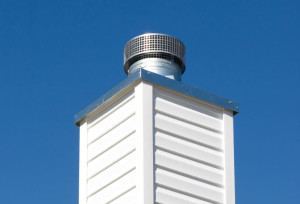
Protecting your chimney from water leaks is an important part of maintaining your chimney. If you have a prefabricated chimney, you likely have a chase that is built around its metal exhaust pipe. When you have a chase around your chimney, it needs to have a good chase cover (also known as a chase pan) that will keep water out of your chimney and chase. Water is the greatest enemy of chimneys, according to the Chimney Safety Institute of America (CSIA). You want to be sure you are doing everything you can to prevent water from penetrating your chimney because of the damage water can do. Not only can water damage the metal components of your chimney, but it can also cause damage to the ceilings and walls in your home. Unfortunately, chase covers do not last forever and should be replaced when you notice any signs of damage. Hudson Chimney sells, installs, and repairs chimney chase covers, and we would like to tell you what you should look for to know it is time to replace your chase cover.
How do I know if my chase cover is damaged?
Although you may have to get on your roof to get a closer look, you will probably be able to see signs of corrosion from rusting on your chase cover from the ground. Chase covers are made from metal, and the cheaper metals tend to start rusting pretty quickly. As soon as your chase cover starts rusting, the cover will develop holes in it, and these holes allow rain to easily enter your chimney. While Hudson Chimney can repair chase covers, if the cover is made from galvanized steel, the metal is probably to weak to repair. You cannot even clean the rust corrosion off of the chase cover because it could break apart.
What should I be looking for in a replacement of my chase cover?
You want to find a chase cover made from either stainless steel or copper. You also want to be sure the cover has been designed correctly. Look for a chase cover that has been designed with a slope from the middle to the sides so that water will run off of the cover and not pool on top in the middle. When water pools on top of a chase cover, it leads to quicker corrosion. Hudson Chimney can help you select the best chase cover for your chimney. No matter if you have multiple flues in one chimney or have an unusually shaped chimney, we can customize a chase cover to protect your chimney and chase from water penetration.
Is it time to replace your chase cover? Contact us at Hudson Chimney to find out how we can help you prevent damage from water leaking into your chimney with the perfect chase cover for your chimney chase.
by Mark Hudson | Mar 9, 2016 | dryer vents, fire safety
Have you been noticing lately that it is taking longer for your clothes dryer to completely dry one load of clothes? If so, this is a sure sign that your dryer vent is dirty and clogged and needs professional cleaning. When the vent is clogged, hot, moist air is trapped in your clothes dryer which makes it difficult for the clothes to dry in one cycle. Not only does a clogged dryer vent make it harder for your dryer to work correctly, it can also be a dangerous fire hazard. Hudson Chimney is proud to offer professional dryer vent cleaning services, along with our chimney and fireplace maintenance, repair, and installation services. When you think about it, your dryer vent is not unlike your chimney as it is used to remove exhaust from your home, which is why we have included this service. Many national fire safety organizations like the Chimney Safety Institute of America (CSIA) and the National Fire Protection Association (NFPA) recommend that you should have your dryer vent professionally cleaned every year to keep it from getting clogged. We would like to tell you more about why it is so important to have this service done.
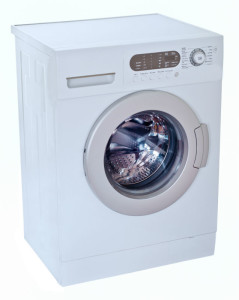
Our professional dryer vent cleaning service will reduce your risk of experiencing a clothes dryer fire.
Your clothes dryer produces a lot of lint, which is so flammable that the Boy Scouts of America recommend that you use it to start campfires. When lint accumulates in your dryer vent, it increases your risk of your clothes dryer catching on fire. You may be surprised at exactly how common clothes dryer fires are. According to the CSIA, the U.S. Consumer Product Safety Commission reported that 5,100 fires caused by dirty clothes dryer vents occurred in 2012. These fires resulted in 10 deaths, 180 injuries, and about $80 million in property damage. These fires and their casualties could have easily been prevented if the homeowners had scheduled a professional dryer vent cleaning. At Hudson Chimney, safety is our top priority, and we work hard to reduce as many fire hazards as we can from your home. Our professional dryer vent cleaning services is just one way we can prevent an accidental fire at your home.
Our professional dryer vent cleaning service will prolong the life of your clothes dryer.
When your dryer vent is clogged, your clothes dryer has to work harder to dry a load of clothes. This not only wastes money on your utility bills as well as energy, but it can also cause parts of your clothes dryer to wear out prematurely. The heating element is one of these parts, and it can be expensive to repair or replace this part. After Hudson Chimney cleans your dryer vent, we guarantee that your clothes dryer will work more efficiently and take less time to dry one load of clothes. You will also notice a reduction in your utility bills because you will not have to run your dryer twice to dry one load of clothes.
If you have noticed your clothes taking longer to dry, contact us at Hudson Chimney. We will be happy to schedule an appointment to professionally clean your dryer vent system.
by Mark Hudson | Feb 25, 2016 | Chimney Cap, Chimney Damper
One of the most important components of a chimney, the damper lets the byproducts of combustion escape from the fireplace into the chimney and seals out the outside air when the fireplace is not in use. Unfortunately, the traditional throat dampers found in most masonry chimneys are not very efficient as they do not form a complete seal when closed. An old damper can cost you a lot of money on both heating and cooling bills because the air from inside your home can leak through to the chimney. If your damper is old, you may want to replace it with a new top-sealing damper. At Hudson Chimney, we are proud to sell two of the most popular top-sealing dampers, the Energy Top and the Energy Top Plus from U.S. Fireplace Products. We would like to tell you a bit about these top-sealing dampers.
Courtesy of Jerry Isenhour
Top-sealing dampers serve more than one purpose.
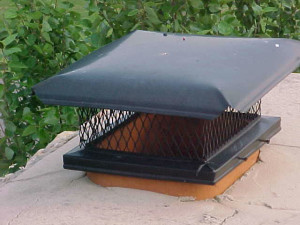
One of Hudson Chimney’s favorite benefits of this type of damper is that it can also be a chimney cap. When the Energy Top damper is closed, it does the same job of a chimney cap. For even better protection, the Energy Top Plus damper is equipped with a stainless steel chimney cap that allows it to serve as a cap even when the damper is open. The cap has wire mesh sides that will keep out birds and animals out of your chimney at all times. This is important because this kind of damper stays open when in the default mode for maximum safety. If the damper were closed when you lit a fire, your home would be filled with smoke and carbon monoxide.
Top-sealing dampers are easy to use and economical.
Both the Energy Top and the Energy Top Plus dampers have an easily accessible handle that makes it simple to open and close the damper. This handle is mounted inside the fireplace. We also like that the price for these dampers is very economical can can fit just about any budget
Top-sealing dampers provide a better seal.
These dampers use a silicone rubber gasket that tightly seals off your fireplace from the chimney opening. Studies have found that heat loss from the chimney is responsible for eight percent of your heating costs. With an Energy Top or an Energy Top Plus damper, you will see at least an eight percent savings in your heating costs. You will also save when you are cooling your home as these dampers will prevent cooled air from escaping from the chimney.
If you have a traditional throat damper that has been used for years, it is time for a new damper. Contact us at Hudson Chimney to learn more about our amazing top-sealing dampers sales and installation services.