Does a Gas Fireplace Need Annual Maintenance?
One of the biggest reasons homeowners choose a gas fireplace is convenience. There’s no wood to haul, no ashes to scoop, and no creosote-coated logs to deal with. Flip a switch or press a remote, and you have a fire. It’s easy to assume that a fireplace that simple doesn’t need any upkeep at all. But gas fireplaces, inserts, and log sets still burn fuel and still vent combustion gases, and that means they still need regular attention. Here’s what our team at Hudson Chimney wants homeowners in Jacksonville, Gainesville, and across Northeast Florida to know about gas fireplace maintenance.
Does a Gas Fireplace Need Annual Maintenance?
Yes. The National Fire Protection Association’s NFPA 211 standard calls for chimneys, fireplaces, and venting systems to be inspected at least once a year, and the Chimney Safety Institute of America (CSIA) recommends annual inspections regardless of fuel type. That includes gas.
Gas burns cleaner than wood, but “cleaner” doesn’t mean “maintenance-free.” A gas appliance has a burner, a pilot or ignition system, valves, gaskets, and a venting system, and all of those parts need to work together for your fireplace to operate safely and efficiently.
What Can Go Wrong With a Gas Fireplace That Isn’t Maintained?
Most gas fireplace problems start small and build over time. Some of the most common issues include:
- Blocked vents or flues. Birds, insects, leaves, and debris can block the vent termination or chimney, keeping combustion gases from exiting your home properly.
- Clogged burner ports. Dust, lint, and even spider webs can block burner ports, leading to uneven flames or ignition trouble.
- Misplaced logs. Gas logs are designed to sit in a specific arrangement. If they shift or are placed incorrectly, flames can hit the logs in the wrong spots and create soot.
- Worn gaskets and seals. On sealed, direct-vent units, a damaged glass gasket can allow combustion gases to escape into the room.
- Pilot and ignition problems. A dirty or worn thermocouple or thermopile can keep the pilot from staying lit.
- Corrosion. Moisture can corrode metal components and venting over time.
Many of these issues won’t be obvious until your fireplace stops working or, worse, starts venting improperly.
Why Do Florida Gas Fireplaces Need Attention Even With Light Use?
Here in Northeast Florida, many homeowners only use their gas fireplace a handful of times each winter. That light use is actually part of the reason maintenance matters. When a fireplace sits unused for most of the year, insects and animals have plenty of time to move in, especially around vents and burners. Our humid climate can also contribute to rust and corrosion on metal parts.
Birds are another Florida concern. Chimney swifts and other birds look for sheltered spots to nest, and an unprotected chimney or vent can be an inviting option. If you’ve ever wondered about those birds you hear in your chimney, our article all about chimney swifts explains what’s going on. A properly fitted cap or vent guard helps keep animals and debris out.
What Happens During a Gas Fireplace Inspection?
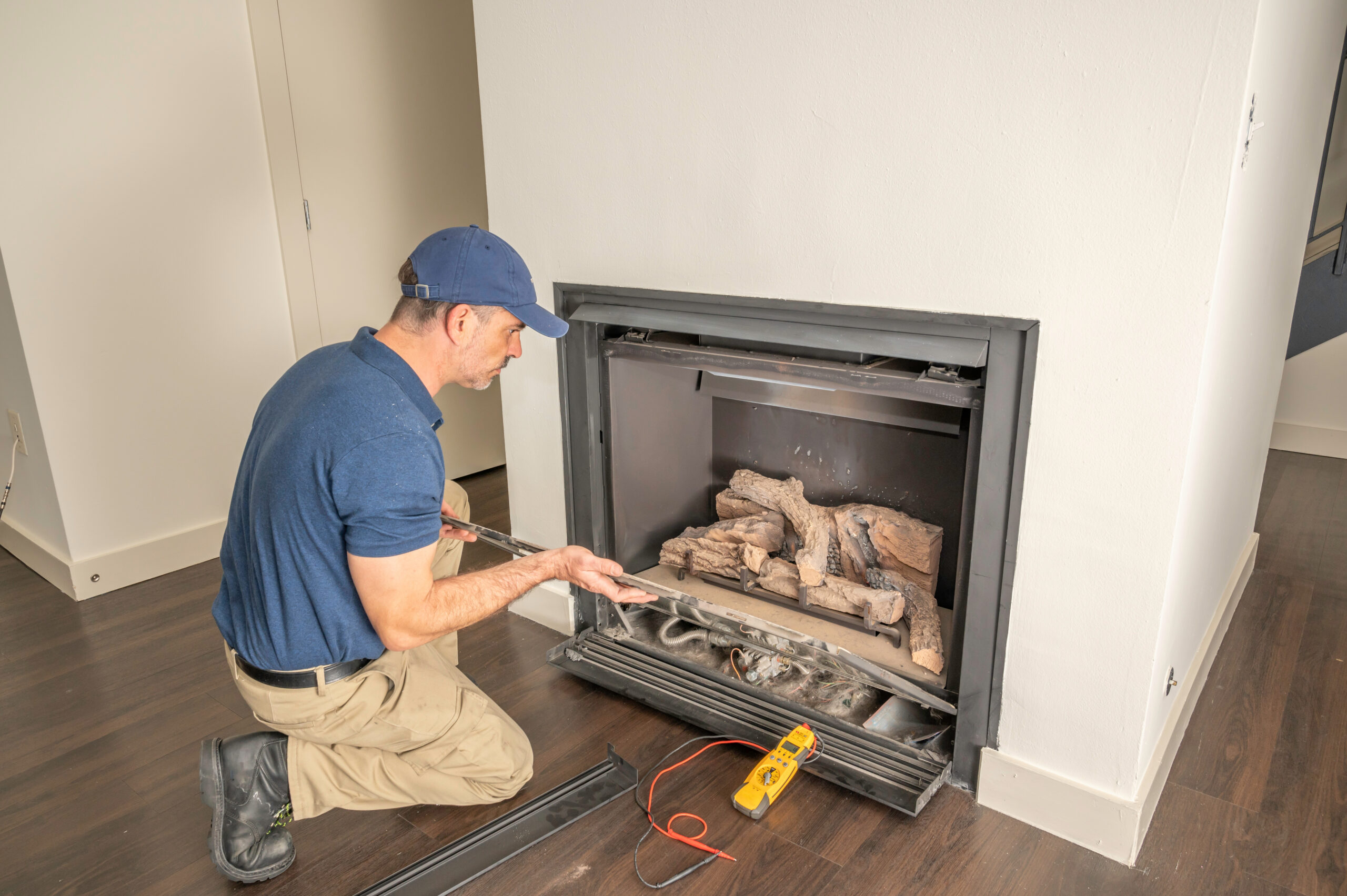
A professional inspection looks at the entire system, not just the part you can see. Depending on your appliance, a technician will typically check:
- The vent or chimney for blockages, damage, and proper connections
- The burner and burner ports for debris and proper flame pattern
- The pilot assembly, thermocouple or thermopile, and ignition components
- Log placement and condition
- The glass and gasket on sealed units
- Signs of soot, corrosion, or heat damage
At Hudson Chimney, our CSIA-certified technicians handle chimney inspections and video scans, and we’re happy to show you photos or video of what we find so you can see your system’s condition for yourself.
What Are the Signs Your Gas Fireplace Needs Service?
Between annual inspections, keep an eye out for these warning signs:
- Yellow or orange flames. A gas fireplace flame is usually mostly blue at the base. Lazy, tall, yellow flames that leave soot can point to a burner, air supply, or log placement problem.
- Soot buildup. Black soot on the logs, glass, or surrounding wall isn’t normal and should be checked.
- A pilot light that won’t stay lit. This is often related to the thermocouple, thermopile, or a dirty pilot assembly.
- Unusual odors. A musty or burning smell when you first turn on the fireplace each season can be dust burning off, but a persistent odor deserves a closer look.
- Difficulty starting. Delayed ignition, clicking without lighting, or a fireplace that shuts off on its own all warrant service.
If you ever smell gas (that rotten egg odor added to natural gas and propane), don’t try to light the fireplace or use any electrical switches. Leave your home and contact your gas utility or emergency services from a safe location.
Is the White Film on My Gas Fireplace Glass Normal?
A light white or cloudy film on the inside of the glass can build up over time as a byproduct of burning gas. It’s common, but it should be cleaned off so it doesn’t etch the glass permanently. Always let the fireplace cool completely, and use a cleaner approved by your fireplace manufacturer. Household glass cleaners may not be appropriate for fireplace glass. If you aren’t comfortable removing the glass panel on your unit, leave this one to a professional, since the gasket needs to seal properly when the glass goes back on.
What Can You Do to Keep Your Gas Fireplace Safe Between Visits?
A few simple habits go a long way:
- Install carbon monoxide alarms. The U.S. Consumer Product Safety Commission recommends CO alarms on every level of your home and outside sleeping areas. Test them regularly.
- Keep the area clear. Don’t store decorations, furniture, or other combustibles too close to the fireplace.
- Leave the logs where they are. If logs get moved, refer to your owner’s manual or have a technician reposition them.
- Check the outside vent. Make sure landscaping, debris, and nests aren’t blocking the termination cap.
- Follow your owner’s manual. Your manufacturer’s instructions are the best guide for safe operation of your specific model.
Is Fall a Good Time to Schedule Gas Fireplace Maintenance?
Fall is ideal. Having your fireplace checked before the first cool snap means you can enjoy it as soon as the weather turns, without discovering a problem on the first chilly evening. If you’re thinking about upgrading, we also carry gas stoves, fireplaces, and inserts from Regency, and our team can help you choose the right appliance for your home.
Who Services Gas Fireplaces Near Jacksonville and Gainesville?
With over 40 years of industry experience, Hudson Chimney is proud to serve homeowners in Jacksonville, Gainesville, Middleburg, Orange Park, Fleming Island, and nearby communities. Whether you need an annual inspection, help with a fireplace that isn’t working the way it should, or advice on a new gas appliance, our team is here to help. Contact us online or give us a call to schedule your appointment today.
 up to. Your gas fireplace has the aesthetic you want and all the convenience you long for. Which will serve you better—a gas stove, insert, or fireplace? Our team at Hudson Chimney can help you determine which appliance will produce the heat you need with all the beauty you want.
 allowing for an extra level of ambiance for the user while also lowering the cost of central heating. If you have a gas fireplace and you aren’t sure what kind it is, we can help. If you’re looking to add a new gas fireplace to your home or property, we can help. There are many different types of gas fire units, including fireplaces, log sets, inserts, and stoves. It’s important to know what you have so that you can properly use and care for it. If you’re converting from wood to gas, it’s important to know your options so you can choose wisely.