by Mark Hudson | Jan 10, 2016 | Water Damage And Chimneys, Winter Maintenance
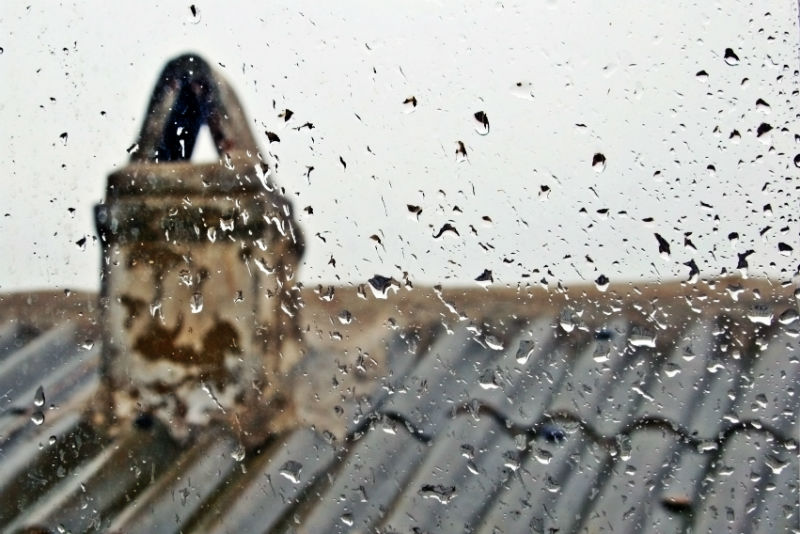
Here in the Jacksonville, Florida area, we are fortunate to enjoy moderate winters, but even though we do not have to deal with much ice and snow, we do have quite a bit of rain during this season. As we have mentioned before, the Chimney Safety Institute of America (CSIA) has named water as the biggest enemy of masonry chimneys. Water from rainfall can cause quite a bit of expensive damage to your chimney, including the collapse of its structure. Hudson Chimney has been repairing leaky chimneys over the past 30 years, and we have seen some truly horrible damage done to the bricks and mortar of chimneys. Not only do we fix chimney leaks, but we also offer a few preventive services to keep water out of chimneys. We are here to help you get your chimney ready for a wet winter so you can avoid expensive chimney repairs from water damage.
Chimney Cap Installation
An essential component of a chimney and venting system, a chimney cap keeps water from rain and melted snow out of your chimney. Without a cap, your chimney is a big hole on the top of your house. You would never leave your doors and windows open during a rainstorm, would you? Hudson Chimney can help you pick out the perfect chimney cap and professionally install it to protect your chimney from water penetration. Not only will a chimney cap keep water out of your chimney, but it will also prevent birds and animals from making a home out of your chimney. Chimney caps also keep sparks from jumping out of the top of a chimney that can ignite an accidental fire, and some types of caps can improve chimney draft problems.
Flashing
Consisting of metal sheeting, flashing wraps around the base of the chimney to keep water from entering at the point of where the chimney meets the roof. Our CSIA-certified chimney technicians will take precise measurements of your chimney to create a flashing system to protect your chimney from water penetration. We also can make repairs if your existing flashing system is damaged.
Waterproofing
To create a barrier against water penetration, Hudson Chimney provides waterproofing services. We feel that waterproofing is one of the best ways to prolong the life of your chimney. Our chimney technicians will start this service by cleaning the exterior of your chimney and then apply a layer of ChimneySaver’s Water Repellant, a 100% vapor permeable formula. This means no water will be able to penetrate into the bricks and mortar of your chimney, but any water vapors already trapped inside these masonry materials will be able to escape.
Prevention is always easier and less expensive than repairing damage. Contact us at Hudson Chimney to make an appointment for us to get your chimney ready for the wet winter.
by Mark Hudson | Dec 31, 2015 | Firewood
The most important factor for the best firewood is for it to be seasoned, or dried, sufficiently. You can find firewood dealers who only sell seasoned wood, but you must store it properly to keep the wood dry. At Hudson Chimney, we are often asked by our customers for the best ways to store firewood, so we thought we would share some firewood storing tips with you to help you protect your wood fuel from the elements.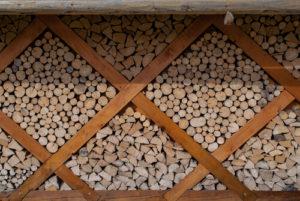
Always store your firewood off the ground.
When you stack your firewood directly on the ground, you are allowing it to absorb moisture from the ground. Even if your wood was seasoned, it will be too wet to burn if it is stored on the ground. If you do not have a storage shed, you can place your stacks of firewood on top of pallets, drain-able gravel, or a tarp.
Cover the top of your stacks of firewood.
To protect your firewood from getting wet from rain, you should place a tarp on top of the wood. Leave the sides of the stacks uncovered so that moisture will not get trapped inside and absorbed into the wood. With the sides open, air will be able to circulate and further the drying process.
Stack your wood properly.
Never stack firewood higher than four feet high. You do not want your stacks to be wobbly, unsteady, and in danger of falling over. Give each stack a few inches of breathing room to allow air to circulate, but you do want to place the stacks close enough together to discourage children and animals from climbing around them.
Build a storage shed.
According to Inman, creating a firewood storage shed is not that difficult. All you need is a raised floor, a sloped roof, and open sides so that the air can circulate and that you can easily get the wood when needed. You will want to build a big enough shed to store a year’s supply of firewood.
Create a smaller storage area inside your home.
If you have a garage or basement, you can store up to a week’s worth of firewood inside your home. This can be very convenient because you will only need to go outside to gather firewood once a week. If you do not have a garage or basement, you can get creative by using a decorative metal tub in your home to store a small supply of firewood.
If you would like more firewood tips, contact us at Hudson Chimney. We are happy to help you enjoy warm and cozy wood fires this winter.
by Mark Hudson | Dec 13, 2015 | Water Damage And Chimneys
Since your chimney extends from your roof, it is exposed to all of the elements of weather, including rain and snow. While masonry chimneys are built to last the lifetime of a house, this constant exposure to water from rain and melted snow can cause damage and deterioration to a chimney, especially if it is neglected. The Chimney Safety Institute of America (CSIA) claims that water is the biggest enemy of a masonry chimney and recommends regular maintenance to prevent expensive repairs due to water penetration damage and deterioration. Hudson Chimney would like to tell you more about how water damages your chimney and how we can help prevent this damage and deterioration.
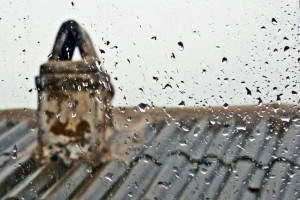
How can water damage my chimney?
According to the CSIA, all of the masonry materials that are used to build a chimney can suffer from accelerated damage after being exposed to water for a long period of time. Water causes the bricks and mortar to erode, and during the winter when the temperature drops below freezing, any water that has been absorbed into the bricks and mortar will freeze and expand. When the weather warms up, this water will thaw and cause the masonry materials to crack and break apart. This type of damage is also known as spalling, and if left unrepaired, it can lead to bricks and pieces of mortar falling from the chimney as well as the collapse of the entire structure. If water leaks into a chimney, it can also cause rusting damage to the liner, damper, and other metal components, and it can even damage the interior of your home by staining ceilings and walls.
How can Hudson Chimney protect my chimney from water damage?
Our CSIA-certified chimney technicians have several ways to prevent water penetration of your chimney: chimney caps, flashing, and waterproofing.
Called the least expensive way to prevent water penetration of a chimney, a chimney cap keeps water from even entering into your chimney. We have several different types of caps, and our chimney experts can help you find the perfect cap for your chimney and install the cap to completely cover the opening. Chimney caps have other benefits as well, including keeping birds and animals out of the chimney and preventing hot embers and sparks from jumping out of the chimney to ignite an accidental fire. We also have chimney caps that can help improve the draft in your chimney if you have problems with backdrafting.
Consisting of pieces of metal, flashing wraps around your chimney where it meets the roof to keep water from getting in at that point. In our years of working on chimneys, we have seen inadequate flashing systems that are coming apart and actually let water enter into the chimney. We construct customized flashing systems to completely protect your chimney from water penetration. We also work with state-licensed roofers to ensure the flashing fits correctly along the roof.
Using a 100% vapor permeable formula, our chimney technicians can waterproof your chimney by applying a coat of this formula to your entire chimney. We use ChimneySaver products that are designed especially for chimneys. This formula provides a barrier on your masonry chimney that keeps water from leaking into the bricks and mortar but allows fumes and vapors to easily escape so that they do not become trapped to cause further damage.
Protect your chimney from water damage this winter. Contact us at Hudson Chimney to schedule an appointment for one of our water penetration prevention services.
by Mark Hudson | Nov 28, 2015 | Chimney Sweeping Logs
Have you ever wondered why you need to have your chimney professionally swept annually? Of course, your chimney gets pretty dirty from regular fires in the fireplace, but soot and dust is not the most important reason for this maintenance task. Your chimney should be cleaned professionally once a year to remove the accumulated creosote from the inner walls of the flue. A compound that forms naturally as a result of the combustion process of burning wood, creosote is extremely flammable and is the main cause of chimney fires. It is essential to get all of the creosote out of your chimney so you can enjoy your fireplace without worrying about this fire hazard. You may have seen chimney sweeping logs, a product that claims to remove and reduce creosote from your chimney, and considered that they could be a substitute for a chimney sweeping by one of the Chimney Safety Institute of America (CSIA)-certified chimney professionals from Hudson Chimney. However, this is not the case, and chimney sweeping logs can even lead to dangers in your home. We would like to tell you more about why you should never substitute a professional chimney cleaning by using chimney sweeping logs.
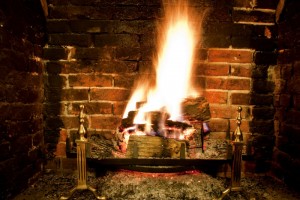
WHAT CHIMNEY SWEEPING LOGS DO
Burning a chimney sweeping log in your fireplace or stove releases chemicals that use catalytic action to remove a portion of accumulated creosote from your chimney. These chemicals cause creosote to flake off and break away from the chimney wall. While this product does remove some of the creosote, the CSIA has its concerns. The claims of chimney sweeping logs are not completely accurate and can lull homeowners into a false sense of security.
THE RISKS OF CHIMNEY SWEEPING LOGS
As we said earlier, creosote is very flammable, so when pieces of creosote are falling down your chimney after flaking off, they could easily catch on fire and lead to a devastating chimney fire. Even if the creosote does not ignite on its way down, the pieces end up at the bottom of your chimney to gather on the smoke shelf and form together to cause yet another fire hazard. Any creosote remaining in your chimney, whether or not it is stuck to the walls of the flue, poses a dangerous fire hazard.
WHY A PROFESSIONAL CHIMNEY SWEEPING IS SO CRUCIAL
Firstly, you can trust our CSIA-certified sweeps at Hudson Chimney to completely remove all of the creosote from your chimney. We know far too well the dangers of creosote, and we take great care to be sure we have gotten all of the accumulated deposits out of your chimney. Not only do we thoroughly clean your chimney, but we also provide a professional inspection with every chimney sweeping. Our sweeps will closely examine the interior and exterior of your chimney to look for any damage that needs to be fixed for your fireplace and chimney to function effectively and safely. If any debris such as nests from birds and animals or leaves are blocking your chimney, we will also remove the blockage to prevent any accidental fires or carbon monoxide leaks.
Have you had your chimney professionally swept this year? Stay away from chimney sweeping logs, and contact us at Hudson Chimney to make an appointment for a safe chimney this winter.
by Mark Hudson | Nov 14, 2015 | Animals in chimney
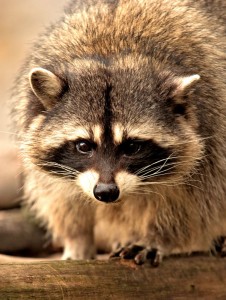
Hearing strange noises coming from your chimney is a sure sign that birds or other animals like squirrels or raccoons have mistaken your chimney for a tree and moved inside for the winter. If you have a family of birds or animals living inside your chimney, you should never attempt to smoke them out by lighting a fire. This can result in severely burning or killing the animals and creating an even larger problem. Our staff at Hudson Chimney is used to dealing with these critters invading chimneys, and we can safely remove them to allow your fireplace and chimney to be used without problems. We would like to tell you more about how to deal with birds and animals in your chimney by sharing with you some information from Chimneys.com.
BIRDS
Typically, birds will build nests on the smoke shelf or just above the damper, but some types of birds build their nests on the sides of chimney liners. You can even have multiple bird nests inside your chimney at one time. The biggest problem you can have with a bird nest in your chimney is that the nest can block your flue, and this can lead to carbon monoxide being forced back into your home. As nesting materials are highly flammable, there is also the risk of a chimney fire. Birds also carry diseases like histoplasmosis, which can cause blindness. If you have migratory birds such as chimney swifts living in your chimney, it is illegal to have these birds removed. You will have to wait until the late spring when they leave their nests to have these nests taken away from your chimney.
SQUIRRELS
Squirrels build nests by packing them very tightly, which makes them difficult to remove. Hudson Chimney has heard reports of chimney sweeps needing hours to remove nests that were over 15 feet long! Not only do the nests of squirrels block the flue of your chimney, but squirrels themselves can open up the damper and enter your home to cause even more damage.
RACCOONS
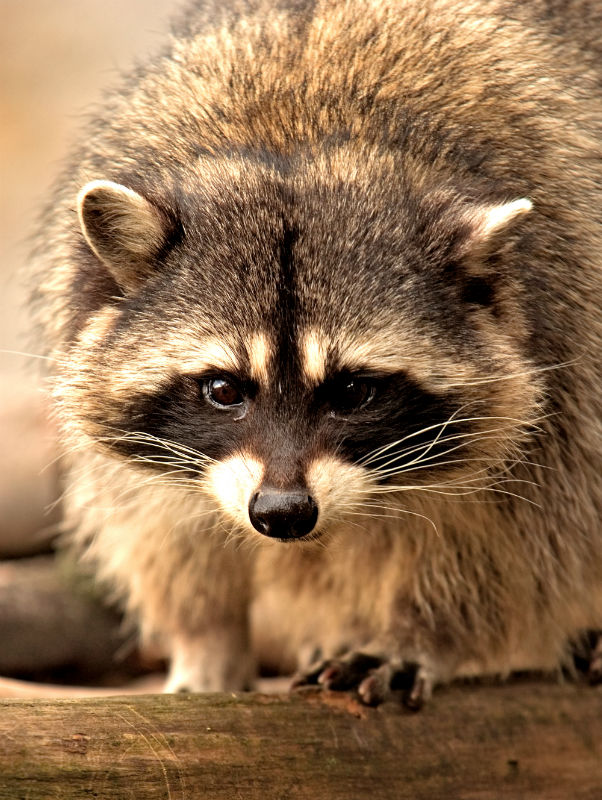
If you have a raccoon in your chimney, we strongly recommend that you leave its removal to professionals and do not attempt to get the animal out yourself. Raccoons can be very aggressive and will bite you. They also carry diseases like rabies and roundworm.
HOW DO I KEEP BIRDS AND ANIMALS OUT OF MY CHIMNEY?
The best way to keep these critters from taking up residence in your chimney is to have a good quality chimney cap installed at the top of the chimney. Be sure the cap is equipped with metal mesh siding, and you will also want to choose a cap constructed from copper or stainless steel as birds and animals can tear up caps made from aluminum.
Heard sounds of birds or animals coming from your chimney? Contact us at Hudson Chimney as soon as possible to ask for our help on removing these critters safely.