by Mark Hudson | Nov 28, 2015 | Chimney Sweeping Logs
Have you ever wondered why you need to have your chimney professionally swept annually? Of course, your chimney gets pretty dirty from regular fires in the fireplace, but soot and dust is not the most important reason for this maintenance task. Your chimney should be cleaned professionally once a year to remove the accumulated creosote from the inner walls of the flue. A compound that forms naturally as a result of the combustion process of burning wood, creosote is extremely flammable and is the main cause of chimney fires. It is essential to get all of the creosote out of your chimney so you can enjoy your fireplace without worrying about this fire hazard. You may have seen chimney sweeping logs, a product that claims to remove and reduce creosote from your chimney, and considered that they could be a substitute for a chimney sweeping by one of the Chimney Safety Institute of America (CSIA)-certified chimney professionals from Hudson Chimney. However, this is not the case, and chimney sweeping logs can even lead to dangers in your home. We would like to tell you more about why you should never substitute a professional chimney cleaning by using chimney sweeping logs.
WHAT CHIMNEY SWEEPING LOGS DO
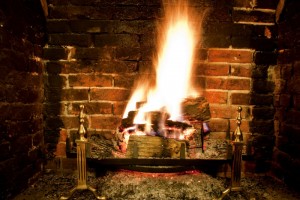
Burning a chimney sweeping log in your fireplace or stove releases chemicals that use catalytic action to remove a portion of accumulated creosote from your chimney. These chemicals cause creosote to flake off and break away from the chimney wall. While this product does remove some of the creosote, the CSIA has its concerns. The claims of chimney sweeping logs are not completely accurate and can lull homeowners into a false sense of security.
THE RISKS OF CHIMNEY SWEEPING LOGS
As we said earlier, creosote is very flammable, so when pieces of creosote are falling down your chimney after flaking off, they could easily catch on fire and lead to a devastating chimney fire. Even if the creosote does not ignite on its way down, the pieces end up at the bottom of your chimney to gather on the smoke shelf and form together to cause yet another fire hazard. Any creosote remaining in your chimney, whether or not it is stuck to the walls of the flue, poses a dangerous fire hazard.
WHY A PROFESSIONAL CHIMNEY SWEEPING IS SO CRUCIAL
Firstly, you can trust our CSIA-certified sweeps at Hudson Chimney to completely remove all of the creosote from your chimney. We know far too well the dangers of creosote, and we take great care to be sure we have gotten all of the accumulated deposits out of your chimney. Not only do we thoroughly clean your chimney, but we also provide a professional inspection with every chimney sweeping. Our sweeps will closely examine the interior and exterior of your chimney to look for any damage that needs to be fixed for your fireplace and chimney to function effectively and safely. If any debris such as nests from birds and animals or leaves are blocking your chimney, we will also remove the blockage to prevent any accidental fires or carbon monoxide leaks.
Have you had your chimney professionally swept this year? Stay away from chimney sweeping logs, and contact us at Hudson Chimney to make an appointment for a safe chimney this winter.
by Mark Hudson | Nov 14, 2015 | Animals in chimney
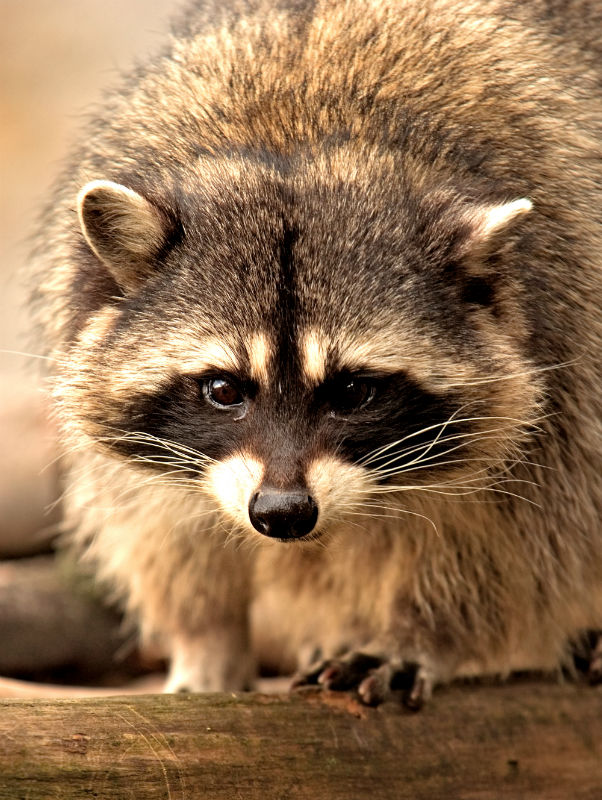
Hearing strange noises coming from your chimney is a sure sign that birds or other animals like squirrels or raccoons have mistaken your chimney for a tree and moved inside for the winter. If you have a family of birds or animals living inside your chimney, you should never attempt to smoke them out by lighting a fire. This can result in severely burning or killing the animals and creating an even larger problem. Our staff at Hudson Chimney is used to dealing with these critters invading chimneys, and we can safely remove them to allow your fireplace and chimney to be used without problems. We would like to tell you more about how to deal with birds and animals in your chimney by sharing with you some information from Chimneys.com.
BIRDS
Typically, birds will build nests on the smoke shelf or just above the damper, but some types of birds build their nests on the sides of chimney liners. You can even have multiple bird nests inside your chimney at one time. The biggest problem you can have with a bird nest in your chimney is that the nest can block your flue, and this can lead to carbon monoxide being forced back into your home. As nesting materials are highly flammable, there is also the risk of a chimney fire. Birds also carry diseases like histoplasmosis, which can cause blindness. If you have migratory birds such as chimney swifts living in your chimney, it is illegal to have these birds removed. You will have to wait until the late spring when they leave their nests to have these nests taken away from your chimney.
SQUIRRELS
Squirrels build nests by packing them very tightly, which makes them difficult to remove. Hudson Chimney has heard reports of chimney sweeps needing hours to remove nests that were over 15 feet long! Not only do the nests of squirrels block the flue of your chimney, but squirrels themselves can open up the damper and enter your home to cause even more damage.
RACCOONS
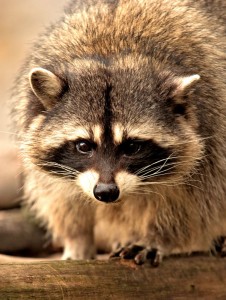
If you have a raccoon in your chimney, we strongly recommend that you leave its removal to professionals and do not attempt to get the animal out yourself. Raccoons can be very aggressive and will bite you. They also carry diseases like rabies and roundworm.
HOW DO I KEEP BIRDS AND ANIMALS OUT OF MY CHIMNEY?
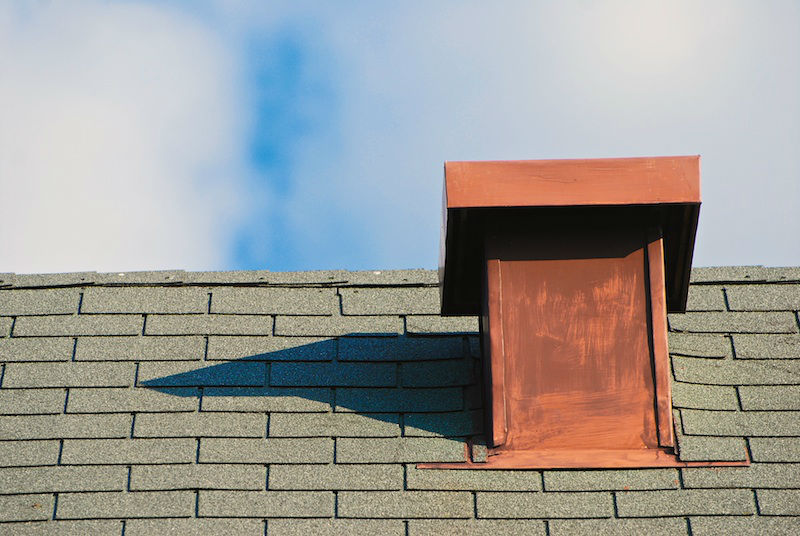
The best way to keep these critters from taking up residence in your chimney is to have a good quality chimney cap installed at the top of the chimney. Be sure the cap is equipped with metal mesh siding, and you will also want to choose a cap constructed from copper or stainless steel as birds and animals can tear up caps made from aluminum.
Heard sounds of birds or animals coming from your chimney? Contact us at Hudson Chimney as soon as possible to ask for our help on removing these critters safely.
by Mark Hudson | Oct 31, 2015 | Chimney Ivy
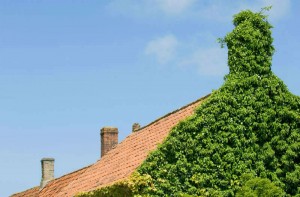
Although the look of ivy climbing up your masonry chimney can be a beautiful sight, this climbing vine can actually damage its structure. Especially if your home was built before 1930, ivy may cause deterioration of the bricks and mortar of your chimney. Masons did not use mortar mixed with Portland cement to construct homes until after 1930, and the earlier mortar mixes are not nearly as strong and durable, according to Today’s Homeowner. Climbing vines like ivy can easily grow into any existing cracks in the bricks and mortar, and this growth can quickly worsen that damage. Our staff at Hudson Chimney knows that many people love the appearance of climbing vines growing against their chimneys, but we would like to tell you more about why ivy and other similar plants can damage your chimney.
What kind of damage can ivy and other climbing vines do to my chimney?
Certain types of ivy such as English ivy grow very aggressively and will attach themselves into cracks and other eroded areas in the masonry materials of your chimney. Additionally, it can be challenging to even see spalling and erosion damage of the bricks and mortar when your chimney is covered by ivy. One of the biggest problems with ivy growing into your masonry chimney is that if you attempt to pull away any ivy growth to check for cracked or missing bricks, you risk the possibility of pulling down your entire chimney structure.
What can I do if I want to keep the ivy growing on my chimney?
Hudson Chimney can professionally inspect the condition of the masonry materials of your chimney to see if it can support the growth of climbing vines without suffering from further damage. Well-built masonry chimneys typically do not have problems with damage from ivy and other climbing vines. Our expert chimney technicians will know if your chimney was built with mortar containing Portland cement, and we will make any necessary repair recommendations that should be done that will allow you to keep your ivy growing against your chimney.
Does Hudson Chimney have any recommendations of better climbing vines to plant?
We do suggest that you avoid any aggressive vines such as English ivy. Virginia creeper and Boston ivy are great alternatives to consider planting. You can also keep these vines from growing directly against the chimney by installing a support made of wire, lattice, or trellis around your chimney. Non-attaching climbing vines such as roses, wisteria, clematis, and jasmine can easily grow along this type of support without any possible damage done to your chimney. Even better, you can move the support to make chimney inspections and repairs easier.
If your older chimney is covered with ivy, contact us at Hudson Chimney. We can inspect the condition of your chimney to be sure no damage has been done.
by Mark Hudson | Oct 16, 2015 | Modern Chimney Standards
When you decide to buy an older home, it is important to realize the responsibility you will have as a homeowner to keep up with the maintenance issues and updates that can be involved. If your house has a fireplace and chimney, making sure everything meets current building codes and standards is crucial. You do not want to risk having to deal with a chimney fire or a carbon monoxide leak in your home because your chimney and fireplace system are not up to codes. Our Chimney Safety Institute of America (CSIA)-certified chimney technicians at Hudson Chimney have much experience with bringing older chimneys up to modern standards and can inspect your fireplace and chimney system to make any recommendations to update your system. While we have seen chimneys that do not meet the current height requirements as well as chimneys that have suffered major spalling damage that has jeopardized the structural soundness, the most common update we do is to install a new chimney liner because the chimney is unlined. Many older homes have unlined chimneys, and this can be quite a hazard. We would like to tell you more about the importance of chimney liners by sharing with you some information from the CSIA.
Why is a chimney liner so important?
Chimney liners serve three essential functions:
1. To protect your home from heat transfers to combustibles.
Without a chimney liner, the high temperatures from a fire can easily ignite combustible materials such as wood.
2. To protect the bricks and mortar of the chimney from corrosion from the byproducts of combustion.
Studies have proven that when combustion gases are allowed to penetrate into masonry materials, the life of the chimney is reduced. A chimney liner keeps these acidic gases from eating away at the mortar joints of your chimney.
3. To provide a correctly sized flue for the optimum efficiency of your heating appliance.
In order to function properly, modern fireplace inserts and stoves need a correctly sized flue. If the flue is too large, you can experience draft problems that will lead to smoke lingering too long inside your chimney, to the accelerated accumulation of creosote, and to the production of carbon monoxide.
If your older chimney is unlined, Hudson Chimney can increase the safety and efficiency of your heating appliance and chimney by installing a new liner. After inspecting your chimney, we will recommend the type of liner you need. Not only do we offer stainless steel liners, but we can design and install a custom liner to correctly match the size of your heating appliance. Contact us today to schedule an inspection of your older chimney to be sure it is up to modern standards.
by Mark Hudson | Sep 29, 2015 | Chimney Safety Week
Whenever September arrives, Hudson Chimney knows that not only will we be busy preparing chimneys in the Jacksonville, Florida area for the upcoming fireplace season, but we will also be getting ready to celebrate with the Chimney Safety Institute of America (CSIA) during their annual National Chimney Safety Week, which occurs the last week of September (September 27 – October 3, 2015). This is an opportunity for chimney professionals across the country to educate people about fire and chimney safety before the weather starts getting cold. A fireplace and chimney system can present many hazards, so it is important to know and follow safety practices whenever you use this part of your home. The last thing you would want to happen this winter is a devastating chimney fire because you neglected to schedule your annual chimney inspection. The Director of Education for the CSIA, Ashley Eldridge says, “Fires in chimneys can start for a variety of reasons. They can be poorly built, or incorrectly designed, or the chimney flue sees a buildup of creosote over time. If you’ve ignored the need for an inspection, you are taking a risk.” Other than having your chimney professionally inspected every year, the CSIA offers other things you should do to reduce your risk of a chimney fire, and we would like to share them with you.
Your chimney is not the only part that should be inspected.
Your wood-burning or gas fireplace should also be examined by a professional to be sure no potential hazards exist. A wood-burning firebox could also have a large buildup of creosote, and this can be an extremely dangerous situation. Ensure your firebox is free from any creosote accumulation before you light a fire inside it. Gas and propane logs may not produce any soot or creosote, but they can deposit corrosive substances within your chimney. Ceramic logs in gas fireplaces can also deteriorate and clog the vents and pilot light. Having the logs checked in your gas fireplace can prevent chimney fires and other fireplace issues that can happen when the pilot light and other connectors are not correctly working.
Be prepared for all severe weather hazards.
To be sure you are ready for a severe storm, such as a hurricane, the CSIA suggest three steps:
1. Know your risk.
Before leaving home in the morning, check the weather reports to be sure you are prepared for any coming weather event.
2. Take action!
Find out more about what kind of weather your area should expect this fall. Make an emergency supplies kit. Come up with a communication plan for your entire family in case of an emergency.
3. Be a force of nature.
If a hurricane or other severe weather storm is heading your way, spread the word! Inspire your friends and family by letting them know how you have prepared for the potentially bad weather.
If you would like to learn more about National Chimney Safety Week, contact us at Hudson Chimney. We are happy to educate you on fire prevention!