by Mark Hudson | Mar 24, 2016 | Chimney Chase Cover, chimney maintenance
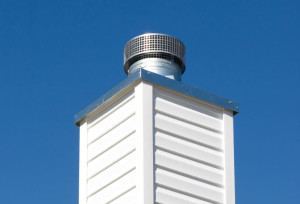
Protecting your chimney from water leaks is an important part of maintaining your chimney. If you have a prefabricated chimney, you likely have a chase that is built around its metal exhaust pipe. When you have a chase around your chimney, it needs to have a good chase cover (also known as a chase pan) that will keep water out of your chimney and chase. Water is the greatest enemy of chimneys, according to the Chimney Safety Institute of America (CSIA). You want to be sure you are doing everything you can to prevent water from penetrating your chimney because of the damage water can do. Not only can water damage the metal components of your chimney, but it can also cause damage to the ceilings and walls in your home. Unfortunately, chase covers do not last forever and should be replaced when you notice any signs of damage. Hudson Chimney sells, installs, and repairs chimney chase covers, and we would like to tell you what you should look for to know it is time to replace your chase cover.
How do I know if my chase cover is damaged?
Although you may have to get on your roof to get a closer look, you will probably be able to see signs of corrosion from rusting on your chase cover from the ground. Chase covers are made from metal, and the cheaper metals tend to start rusting pretty quickly. As soon as your chase cover starts rusting, the cover will develop holes in it, and these holes allow rain to easily enter your chimney. While Hudson Chimney can repair chase covers, if the cover is made from galvanized steel, the metal is probably to weak to repair. You cannot even clean the rust corrosion off of the chase cover because it could break apart.
What should I be looking for in a replacement of my chase cover?
You want to find a chase cover made from either stainless steel or copper. You also want to be sure the cover has been designed correctly. Look for a chase cover that has been designed with a slope from the middle to the sides so that water will run off of the cover and not pool on top in the middle. When water pools on top of a chase cover, it leads to quicker corrosion. Hudson Chimney can help you select the best chase cover for your chimney. No matter if you have multiple flues in one chimney or have an unusually shaped chimney, we can customize a chase cover to protect your chimney and chase from water penetration.
Is it time to replace your chase cover? Contact us at Hudson Chimney to find out how we can help you prevent damage from water leaking into your chimney with the perfect chase cover for your chimney chase.
by Mark Hudson | Mar 9, 2016 | dryer vents, fire safety
Have you been noticing lately that it is taking longer for your clothes dryer to completely dry one load of clothes? If so, this is a sure sign that your dryer vent is dirty and clogged and needs professional cleaning. When the vent is clogged, hot, moist air is trapped in your clothes dryer which makes it difficult for the clothes to dry in one cycle. Not only does a clogged dryer vent make it harder for your dryer to work correctly, it can also be a dangerous fire hazard. Hudson Chimney is proud to offer professional dryer vent cleaning services, along with our chimney and fireplace maintenance, repair, and installation services. When you think about it, your dryer vent is not unlike your chimney as it is used to remove exhaust from your home, which is why we have included this service. Many national fire safety organizations like the Chimney Safety Institute of America (CSIA) and the National Fire Protection Association (NFPA) recommend that you should have your dryer vent professionally cleaned every year to keep it from getting clogged. We would like to tell you more about why it is so important to have this service done.
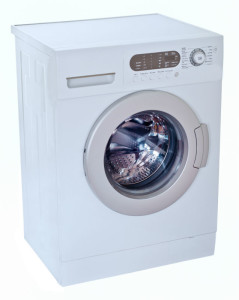
Our professional dryer vent cleaning service will reduce your risk of experiencing a clothes dryer fire.
Your clothes dryer produces a lot of lint, which is so flammable that the Boy Scouts of America recommend that you use it to start campfires. When lint accumulates in your dryer vent, it increases your risk of your clothes dryer catching on fire. You may be surprised at exactly how common clothes dryer fires are. According to the CSIA, the U.S. Consumer Product Safety Commission reported that 5,100 fires caused by dirty clothes dryer vents occurred in 2012. These fires resulted in 10 deaths, 180 injuries, and about $80 million in property damage. These fires and their casualties could have easily been prevented if the homeowners had scheduled a professional dryer vent cleaning. At Hudson Chimney, safety is our top priority, and we work hard to reduce as many fire hazards as we can from your home. Our professional dryer vent cleaning services is just one way we can prevent an accidental fire at your home.
Our professional dryer vent cleaning service will prolong the life of your clothes dryer.
When your dryer vent is clogged, your clothes dryer has to work harder to dry a load of clothes. This not only wastes money on your utility bills as well as energy, but it can also cause parts of your clothes dryer to wear out prematurely. The heating element is one of these parts, and it can be expensive to repair or replace this part. After Hudson Chimney cleans your dryer vent, we guarantee that your clothes dryer will work more efficiently and take less time to dry one load of clothes. You will also notice a reduction in your utility bills because you will not have to run your dryer twice to dry one load of clothes.
If you have noticed your clothes taking longer to dry, contact us at Hudson Chimney. We will be happy to schedule an appointment to professionally clean your dryer vent system.
by Mark Hudson | Feb 25, 2016 | Chimney Cap, Chimney Damper
One of the most important components of a chimney, the damper lets the byproducts of combustion escape from the fireplace into the chimney and seals out the outside air when the fireplace is not in use. Unfortunately, the traditional throat dampers found in most masonry chimneys are not very efficient as they do not form a complete seal when closed. An old damper can cost you a lot of money on both heating and cooling bills because the air from inside your home can leak through to the chimney. If your damper is old, you may want to replace it with a new top-sealing damper. At Hudson Chimney, we are proud to sell two of the most popular top-sealing dampers, the Energy Top and the Energy Top Plus from U.S. Fireplace Products. We would like to tell you a bit about these top-sealing dampers.
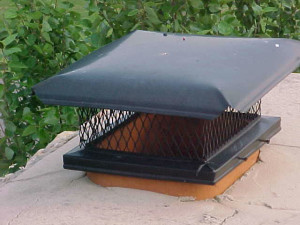
Courtesy of Jerry Isenhour
Top-sealing dampers serve more than one purpose.
One of Hudson Chimney’s favorite benefits of this type of damper is that it can also be a chimney cap. When the Energy Top damper is closed, it does the same job of a chimney cap. For even better protection, the Energy Top Plus damper is equipped with a stainless steel chimney cap that allows it to serve as a cap even when the damper is open. The cap has wire mesh sides that will keep out birds and animals out of your chimney at all times. This is important because this kind of damper stays open when in the default mode for maximum safety. If the damper were closed when you lit a fire, your home would be filled with smoke and carbon monoxide.
Top-sealing dampers are easy to use and economical.
Both the Energy Top and the Energy Top Plus dampers have an easily accessible handle that makes it simple to open and close the damper. This handle is mounted inside the fireplace. We also like that the price for these dampers is very economical can can fit just about any budget
Top-sealing dampers provide a better seal.
These dampers use a silicone rubber gasket that tightly seals off your fireplace from the chimney opening. Studies have found that heat loss from the chimney is responsible for eight percent of your heating costs. With an Energy Top or an Energy Top Plus damper, you will see at least an eight percent savings in your heating costs. You will also save when you are cooling your home as these dampers will prevent cooled air from escaping from the chimney.
If you have a traditional throat damper that has been used for years, it is time for a new damper. Contact us at Hudson Chimney to learn more about our amazing top-sealing dampers sales and installation services.
by Mark Hudson | Feb 11, 2016 | Chimney Draft Issues
Trying to start a fire when your chimney is filled with cold air can be a challenge. Once you get the fire lit, you end up with smoke blowing back into the room because all of that cold air sinking down the chimney. This once-seemingly simple task can end up causing a lot of frustration. Knowing how to prime your chimney can be a game-changer if you have cold chimney problems. Hudson Chimney would like to eliminate any frustrations you may have with igniting a fire by telling you how you can warm up your flue, along with a couple of other tips on starting and maintaining a good fire.
Priming your chimney
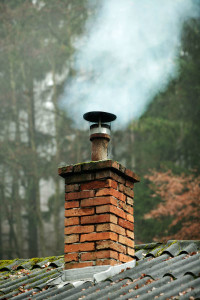
When the weather is cold outside, the air in your chimney can be just as chilly, especially if your chimney is built on the exterior of your house. Once you open the damper to prepare to get a fire started, that heavy cold air in the flue will sink down the chimney into your home and create difficulties in lighting a fire. The key to preventing this cold air sink is priming your chimney before attempting to light the fire. All you have to do is light a rolled-up newspaper and hold it like a torch up the damper for several minutes. You should be able to feel the draft reverse once enough warm air has mixed with the cold air. Once you feel this reversal, you should be ready to light a fire.
Insulating your firebox
Another way to help you start a fire with no problems is to insulate your firebox with a thin layer of ashes. The Chimney Safety Institute of America (CSIA) recommends leaving a one-inch layer of ashes on your firebox floor to protect and insulate the firebox, which makes it easier to build and maintain a good fire. If you are using your fireplace on a regular basis, you should be removing the ashes every week. Just remember to leave that thin layer of ashes when you do this task.
Building a top-down
To keep your fire burning, you should be using the top-down burn method when you build the fire. For this build, you start by placing the largest pieces of firewood on the bottom of the firebox. Next, take smaller pieces of wood and layer them on top of the larger pieces. At the very top of this stack, place a layer of kindling and wood shavings. You should be able to light the kindling with a single match. Not only does this build allow the fire to burn longer with less maintenance, but it also will burn cleaner because the smoke does not have to pass through cold firewood.
Want more wood burning tips? Contact us at Hudson Chimney to learn how to maximize your fireplace.
by Mark Hudson | Jan 30, 2016 | Fire Safety Tips
Did you realize that half of the residential fires caused by home heating systems occur during the months of December, January, and February? Since we use our fireplaces, stoves, and other heating appliances frequently during these winter months, this statistic makes sense, but most of these home fires could have been easily prevented by following fire safety precautions. At Hudson Chimney, fire safety is our top priority, and we like to educate our customers on the best ways of operating their fireplaces and other heating appliances. We would like to tell you a few important fireplace safety tips that will keep you and your family warm and safe this winter.
Remember to have your fireplace and chimney professionally cleaned and inspected every year.
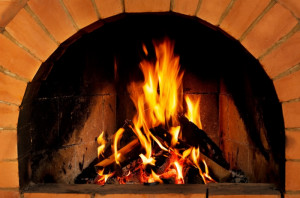
The most important preventive maintenance task you can do to avoid fire hazards is to schedule an annual appointment with Hudson Chimney for our chimney sweeping and inspection services. Our Chimney Safety Institute of America (CSIA)-certified chimney sweeps will reduce your risk of chimney fires by removing all of the creosote deposits that have accumulated on the inner walls of your chimney. We will also inspect your chimney to be sure there are no flue blockages or any damage that could cause your chimney to be unsafe to use.
You should always have your heating appliances professionally installed.
The
National Fire Protection Association (NFPA) recommends that all fireplace inserts, stoves, and other heating appliances be installed by certified professionals to protect you from hazards such as accidental fires and carbon monoxide leaks.
Keep the area surrounding your fireplace clear from combustible items.
To prevent an accidental fire being ignited by hot sparks and embers that can jump from the firebox, Hudson Chimney recommends that you keep all flammable items such as furniture, curtains, and rugs at least three feet away from your fireplace.
Set up a sturdy fireplace screen in front of your fireplace.
A metal mesh fireplace screen can prevent accidental fires by keeping hot sparks and embers from flying into the room. This will also protect your children and pets from getting too close to the fire.
Ensure you have smoke and carbon monoxide detector alarms installed in your room.
If you do not already, install these essential alarms in the same room as your heating appliance, outside each bedroom, and on every level of your home. Check the batteries for these alarms when you change your clocks in the spring and fall for Daylight Savings Time.
Need more fireplace safety tips? Contact us at Hudson Chimney to have your safety questions answered.